The War on Wheels
Across Britain's metropolitan areas, a coordinated assault on personal mobility is accelerating under the banner of environmental protection. Traffic filters, low-traffic neighbourhoods (LTNs), expanded Ultra Low Emission Zones (ULEZ), and proposed road pricing schemes are being implemented at breakneck speed by councils that conspicuously failed to mention these radical restrictions during election campaigns.
This represents the most significant constraint on freedom of movement since wartime petrol rationing — yet it's being imposed through technocratic back channels designed to avoid democratic scrutiny. The 'clean air' framing is providing perfect cover for policies that would have been politically impossible to implement openly.
The Class War on Four Wheels
These measures disproportionately punish working-class drivers who cannot afford electric vehicles or live near adequate public transport. ULEZ expansion in London forces tradespeople, care workers, and shift workers to pay £12.50 daily for the privilege of earning a living. Many earn barely above minimum wage but face bills of over £3,000 annually simply for driving to work.
Meanwhile, wealthy residents of inner London boroughs — who overwhelmingly supported these measures — can easily afford compliant vehicles or rely on excellent public transport links. The green agenda has become a class weapon, wielded by metropolitan elites against working people whose livelihoods depend on vehicular mobility.
Oxford County Council's proposed traffic filters would fine residents £70 for crossing their own city more than 100 times annually. Canterbury's LTN schemes trap residents in their neighbourhoods unless they can afford the technology and bureaucracy required to navigate the permit system. These aren't environmental measures — they're digital mobility apartheid.
Democratic Deficit by Design
The implementation process reveals contempt for democratic accountability. Councils routinely introduce 'experimental' traffic orders under emergency powers, then make them permanent after perfunctory consultations designed to minimise opposition. Public meetings are scheduled at inconvenient times, consultation documents are deliberately technical and opaque, and objections are dismissed as 'misinformation'.
Brighton and Hove City Council implemented its LTN network during COVID lockdowns when public scrutiny was impossible. Lambeth Council ignored a petition signed by 6,000 residents opposing its traffic filters. Hackney Council proceeded with its scheme despite 68% opposition in its own consultation. This isn't democratic governance — it's technocratic imposition.
The legal framework enables this circumvention. The Road Traffic Regulation Act allows councils to implement restrictions first and consult later. Traffic Regulation Orders can be imposed under 'experimental' provisions that last 18 months — long enough to normalise restrictions and make reversal politically difficult.
The 15-Minute City Ideology
Behind the technical jargon lies a comprehensive ideological project to reshape British society around anti-car principles. The '15-minute city' concept, promoted by organisations like C40 Cities and embedded in local planning frameworks, explicitly aims to eliminate car dependency by making car ownership inconvenient and expensive.
This isn't environmental pragmatism — it's social engineering. The goal isn't cleaner air but behavioural modification, forcing people to abandon cars in favour of walking, cycling, and public transport. The environmental benefits are secondary to the ideological satisfaction of constraining individual choice and mobility.
Council planning documents reveal the true agenda. Oxford's Local Plan 2040 explicitly states aims to 'reduce car ownership' and 'discourage car use'. Edinburgh's City Mobility Plan targets a 30% reduction in car journeys by 2030. These aren't emissions targets — they're social control objectives.
The Public Transport Myth
Advocates claim these restrictions will improve public transport by reducing traffic congestion. This ignores the reality of Britain's public transport network outside central London. Bus services have been decimated by local authority cuts, with 3,000 routes cancelled since 2010. Train services are expensive, unreliable, and geographically limited.
For a care worker in suburban Birmingham visiting elderly clients across the city, or a tradesperson in rural Kent serving customers within a 50-mile radius, public transport isn't an alternative — it's a fantasy. These workers face a choice between career destruction and daily ULEZ fines. The middle-class urbanites designing these policies have never faced such choices.
Even where public transport exists, it's often inadequate for complex journey patterns. A parent in outer London dropping children at school, commuting to work, shopping for groceries, and visiting elderly relatives cannot replicate this routine using buses and trains. The car isn't a lifestyle choice for most families — it's an economic necessity.
Environmental Pretext, Authoritarian Text
The environmental justification crumbles under scrutiny. Air quality in British cities has improved dramatically over recent decades through vehicle emission standards and cleaner fuels. London's air is cleaner now than at any time since the Industrial Revolution, yet ULEZ expansion proceeds regardless.
Real pollution sources — aviation, shipping, industrial processes — receive minimal attention compared to the obsessive focus on private cars. Heathrow Airport generates more emissions than all the cars in central London combined, yet faces no equivalent restrictions. This selectivity reveals the true motivation: ideological hostility to private transport, not environmental protection.
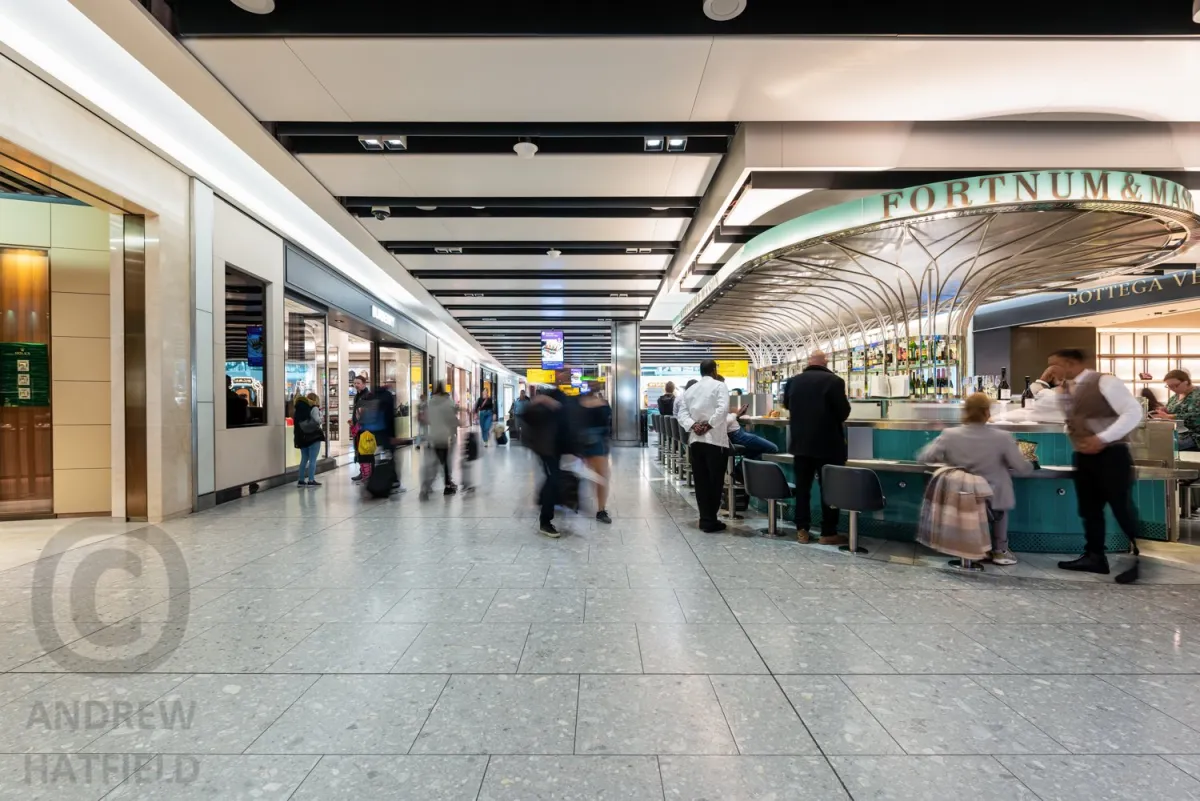 Photo: Heathrow Airport, via images.squarespace-cdn.com
The carbon impact is similarly questionable. Forcing drivers to take longer routes around LTNs increases emissions. Encouraging earlier vehicle replacement through ULEZ creates manufacturing emissions that dwarf operational savings. The policies often increase pollution whilst claiming to reduce it.
Technology as Control
The enforcement mechanisms reveal the authoritarian character of these schemes. Automatic Number Plate Recognition (ANPR) cameras track every vehicle movement, creating comprehensive surveillance of personal mobility. This data is stored indefinitely and shared between authorities without democratic oversight.
Road pricing proposals would extend this surveillance to charge drivers per mile travelled, requiring GPS tracking of every journey. The privacy implications are staggering — government would monitor when you visit friends, where you shop, which routes you take. This level of surveillance would have been unthinkable a generation ago but is now presented as environmental necessity.
The technology enables arbitrary rule changes without public consultation. ULEZ boundaries can be extended, charging rates increased, and exemptions removed through simple software updates. Democratic accountability becomes impossible when policy changes can be implemented remotely.
The Suburban Squeeze
These policies represent an assault on suburban life itself. The ability to live in affordable housing outside city centres whilst maintaining urban employment depends on reliable private transport. By making car ownership prohibitively expensive, councils are forcing people into expensive urban housing or lengthy commutes using inadequate public transport.
This serves the interests of urban property owners and public transport operators whilst harming suburban families and rural communities. Young families priced out of urban areas face the choice between unaffordable city rents or daily mobility charges. The policies entrench geographical inequality whilst claiming environmental virtue.
Fighting Back: The Democratic Response
Conservative opposition to these schemes isn't anti-environmental — it's pro-democratic and pro-choice. Environmental improvements should be achieved through innovation and incentives, not punishment and coercion. Electric vehicle adoption is accelerating naturally through technological improvement and market forces, making punitive measures unnecessary.
The solution requires reasserting democratic control over local transport policy. Traffic Regulation Orders should require full council votes after genuine public consultation. Emergency powers should be restricted to genuine emergencies, not ideological projects. Revenue from traffic enforcement should be ring-fenced for road maintenance, not general council spending.
Parliament should intervene where local democracy fails. National legislation could require super-majority council votes for measures restricting vehicular access, mandate compensation for businesses harmed by traffic restrictions, and establish appeal mechanisms for affected residents.
Personal mobility is personal freedom — and no amount of environmental rhetoric justifies its destruction through the back door of local government technocracy.