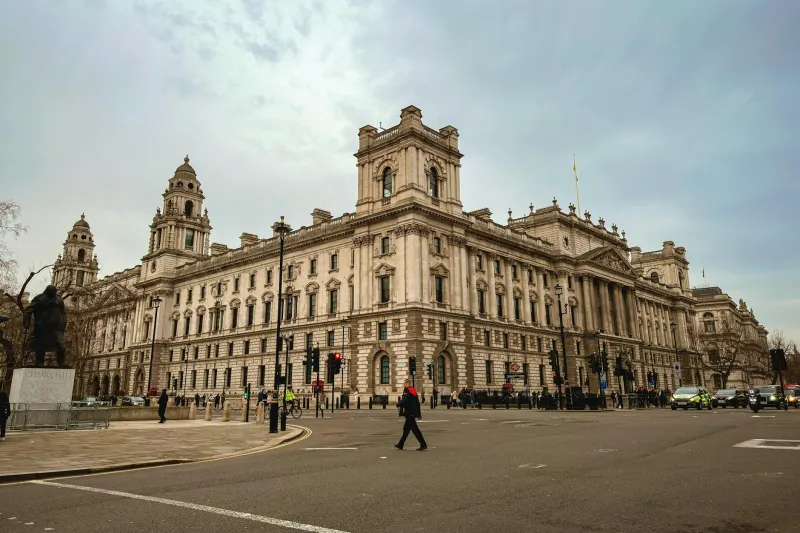
The Permanent Government Problem
Every few years, British voters elect a new government with fresh promises and clear mandates. Then something curious happens: the policies mysteriously fail to materialise, get watered down beyond recognition, or emerge as the opposite of what was promised. The explanation isn't incompetence — it's institutional resistance from a civil service that has forgotten who it serves.
The latest evidence comes from the ongoing revelations about civil service obstruction during the Brexit negotiations, where senior officials actively undermined government policy while briefing against their own ministers. But this isn't about Europe — it's about a permanent bureaucracy that views elected politicians as temporary inconveniences to be managed rather than democratic representatives to be served.
The civil service has grown into a self-perpetuating caste with its own interests, ideology, and agenda. And that agenda increasingly conflicts with what conservative voters actually want.
The Blob Strikes Back
Consider the immigration department, where officials spent years finding creative ways to avoid implementing the policies they were instructed to deliver. Internal emails revealed civil servants celebrating court defeats for government immigration policies and sharing strategies to delay deportations.
Or look at the Treasury, where officials routinely leak selective statistics to friendly journalists to undermine policies they oppose. The same department that somehow 'miscalculated' the costs of leaving the EU by tens of billions while providing suspiciously precise estimates for the benefits of remaining.
The pattern repeats across Whitehall: promises made to voters, policies announced by ministers, then mysterious implementation failures blamed on 'complexity' or 'unforeseen circumstances'. The civil service has perfected the art of killing policies through process.
Ideology in Disguise
The modern civil service pretends to political neutrality while pursuing a distinctly progressive agenda. Diversity and inclusion officers outnumber policy specialists in many departments. Environmental activists masquerade as scientific advisors. Human rights lawyers populate the Home Office like antibodies attacking a virus.
This isn't accidental. Graduate recruitment deliberately targets universities and courses that produce left-leaning activists. The fast-stream programme reads like a wishlist for Guardian readers: emphasis on 'social justice', 'climate action', and 'inclusive leadership'. Traditional conservative values like fiscal responsibility, national sovereignty, and law and order are treated as outdated prejudices to be overcome.
The result is a civil service that shares the worldview of Islington dinner parties, not Basildon focus groups. When ministers arrive with mandates from conservative voters, they encounter a machine programmed to resist everything those voters actually want.
The Growth Machine
The civil service's first loyalty isn't to ministers or voters — it's to its own expansion. Headcount in Whitehall has grown by over 100,000 since 2010, even as ministers promised to cut bureaucracy. Every crisis becomes justification for new departments, new roles, new layers of process.
COVID-19 provided the perfect excuse. The civil service added thousands of permanent roles for 'pandemic preparedness', 'behavioural insights', and 'strategic communications'. Many of these positions will outlast the ministers who supposedly created them, embedding permanently into the machine.
Meanwhile, the actual delivery of government services continues to deteriorate. Passport processing collapses, immigration cases pile up, and planning applications disappear into bureaucratic black holes. The civil service grows but the state shrinks where it matters.
Accountability Theatre
When things go wrong, ministers resign while civil servants get promoted. The Windrush scandal cost a Home Secretary her job but led to expanded roles for the officials who designed the hostile environment policy. The Afghan evacuation chaos saw military commanders sacked while Foreign Office officials received honours.
Parliamentary committees provide the illusion of oversight, but civil servants have mastered the art of saying nothing while appearing helpful. They promise reviews, cite ongoing processes, and defer to ministers who weren't in post when decisions were made. Accountability disappears into a fog of collective responsibility and institutional amnesia.
The Freedom of Information Act was supposed to shine light into government darkness. Instead, it's become another tool for civil service obstruction. Requests are delayed, redacted beyond recognition, or rejected on spurious grounds. The public's right to know becomes the bureaucracy's right to hide.
International Comparisons
Other countries manage their civil services differently. In America, each new administration brings thousands of political appointees into senior positions, ensuring bureaucratic alignment with electoral mandates. In France, the grands corps system produces technocrats loyal to state efficiency rather than ideological fashion.
Britain's system assumes permanent officials will loyally implement any government's agenda. This assumption worked when the civil service shared basic conservative assumptions about national interest, fiscal responsibility, and democratic legitimacy. It breaks down when the bureaucracy views these principles as obstacles to enlightened governance.
The Reform Imperative
Conservative governments need conservative civil servants, just as Labour governments need officials who believe in their agenda. The current system guarantees institutional resistance to any genuinely conservative programme.
Reform must start with recruitment. Universities that teach students to despise their own country shouldn't supply the people who run it. Graduate schemes should prioritise practical experience over theoretical activism. Departments need officials who understand business, not just seminar rooms.
Senior appointments require political oversight. Permanent secretaries who actively undermine government policy should face the same consequences as ministers who fail to deliver it. The fiction of political neutrality must end when it becomes a shield for political opposition.
Most importantly, the civil service needs external competition. Private sector secondments, fixed-term contracts, and performance-based dismissals would inject accountability into a system designed to avoid it.
Democracy Versus Bureaucracy
The choice is stark: either elected politicians control the permanent government, or the permanent government controls elected politicians. Britain is dangerously close to the latter.
Conservative voters who want real change cannot settle for changing ministers while leaving the machine intact. The civil service has become the primary obstacle to conservative governance, and it will remain so until conservatives find the courage to reform it.
Democracy means the people rule through their elected representatives — not through an unelected caste of progressive bureaucrats who know better than voters what's good for them.