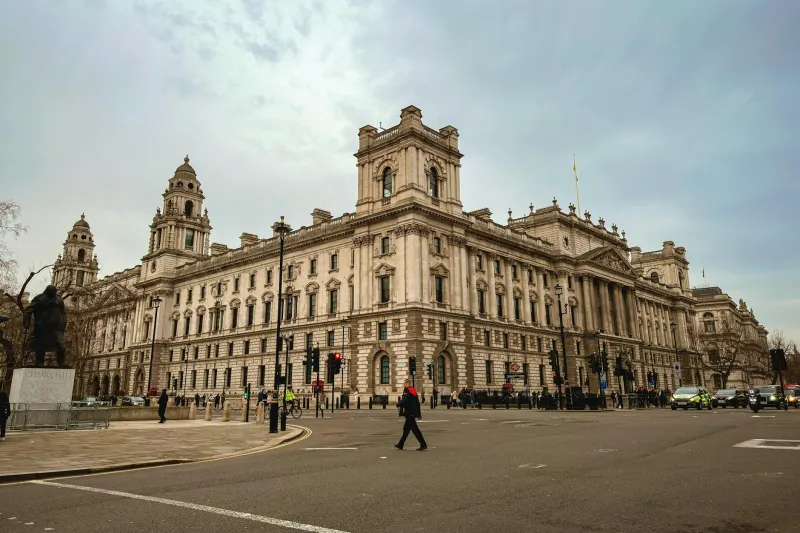
The Establishment's Reflexive Defence
When Safeguarding Minister Jess Phillips initially refused to commission a national inquiry into grooming gangs in December 2024, she inadvertently exposed the establishment's most damaging instinct: the reflexive protection of institutional reputation over individual justice. Her subsequent U-turn, announced just weeks later following intense pressure from victims' groups and Conservative MPs, was welcome—but it revealed something far more troubling about how our governing class thinks.
Phillips's original justification was textbook Whitehall: existing inquiries were sufficient, resources were limited, and local authorities were "learning lessons." It was the language of managed decline, of bureaucratic box-ticking masquerading as serious governance. Most telling was her suggestion that a national inquiry might somehow interfere with ongoing police investigations—as if accountability and justice were mutually exclusive rather than mutually reinforcing.
The Pattern of Institutional Self-Preservation
This is not a Labour problem or a Conservative problem—it is a Whitehall problem. For over a decade, successive governments have approached the grooming gang scandals with the same institutional cowardice. The 2014 Jay Report into Rotherham documented how 1,400 children were abused whilst social services, police, and council officials prioritised their own reputations over child protection. The response? More reports, more reviews, more "lessons learned"—but precious little accountability.
The Alexis Jay inquiry, established in 2015, has produced valuable work but operated within carefully managed parameters. Local inquiries in Rochdale, Telford, and elsewhere have documented systematic failures but rarely translated findings into meaningful consequences for those responsible. Meanwhile, the very officials who presided over these failures have often been quietly moved sideways or allowed to retire with full pensions.
This pattern reveals something profound about modern governance: institutions have become ends in themselves rather than means to serve the public. The primary concern is not whether children were protected, but whether the reputation of social services remains intact. Not whether justice was delivered, but whether the police force avoided embarrassment.
The Conservative Case for Radical Accountability
True conservatism demands something different. At its core, conservative philosophy prioritises the protection of the vulnerable over the comfort of the powerful. It insists that institutions exist to serve individuals, not the other way around. Edmund Burke's "little platoons"—the local institutions that bind society together—only retain legitimacy when they fulfil their fundamental duties.
The grooming gang scandals represent the complete inversion of this principle. Children—the most vulnerable members of society—were systematically failed by every institution supposedly designed to protect them. Social services ignored warning signs, police dismissed victims as "consenting," and council leaders prioritised community cohesion over child safety. When institutions fail this catastrophically, conservative principles demand their radical reform or replacement.
Yet successive Conservative governments have been as guilty as their Labour predecessors of choosing institutional comfort over individual justice. The party that claims to champion law and order has consistently allowed the very institutions responsible for maintaining both to escape meaningful accountability.
The Inquiry That Must Have Teeth
Phillips's eventual announcement of a national inquiry represents a victory for persistent campaigning by victims and their advocates. But the real test lies not in the inquiry's establishment but in its execution. Previous inquiries have operated under terms of reference carefully crafted to avoid the most uncomfortable questions. They have documented failures without demanding consequences, identified systemic problems without insisting on systemic solutions.
A meaningful inquiry must do more than produce another report for Whitehall filing cabinets. It must have the power to compel evidence from serving and former officials, to examine the career consequences (or lack thereof) for those responsible for failures, and to recommend fundamental reforms to how child protection operates across government.
Crucially, it must address the elephant in the room that previous inquiries have tiptoed around: how concerns about community relations and accusations of racism were weaponised to silence those attempting to protect children. This is not about targeting any particular community, but about ensuring that no consideration—however well-intentioned—can ever again take precedence over child safety.
Beyond Managed Conclusions
The greatest risk now is that this inquiry becomes another exercise in managed conclusions. Whitehall excels at commissioning reviews that appear thorough whilst carefully avoiding the most damaging revelations. Terms of reference are crafted to exclude uncomfortable questions, witnesses are coached to provide acceptable answers, and final reports are buried beneath more pressing news cycles.
Conservatives who genuinely believe in accountability must resist this instinct. The inquiry must examine not just what happened in individual cases, but why the system repeatedly failed to learn from its mistakes. It must ask why officials who presided over catastrophic failures were rarely held accountable, and why institutional self-preservation consistently trumped individual justice.
The Deeper Constitutional Question
Ultimately, the grooming gang scandals pose a fundamental constitutional question: to whom are our institutions accountable? The current answer appears to be themselves. Officials investigate officials, institutions review institutions, and the establishment polices the establishment. This circular accountability ensures that serious failures rarely result in serious consequences.
Breaking this cycle requires more than another inquiry—it demands a fundamental shift in how we think about institutional accountability. It means accepting that some failures are so catastrophic that they require not just reform but replacement. It means prioritising individual justice over institutional reputation, even when—especially when—that makes the establishment uncomfortable.
The grooming gang inquiry represents a test of whether our democracy can still hold its institutions to account, or whether we have become a system where power protects itself regardless of the human cost.
True accountability means accepting that some institutions have forfeited their right to exist—and having the courage to say so.