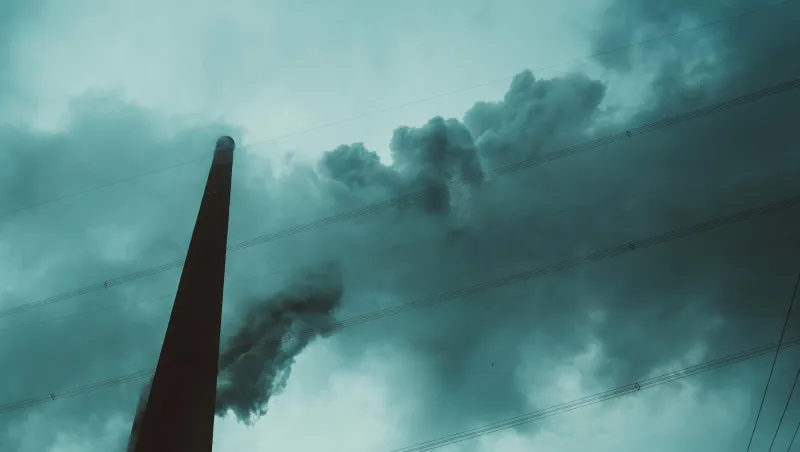
British Steel's announcement last month that it would close its blast furnaces at Scunthorpe, with the loss of 2,500 jobs, marked another milestone in Britain's industrial decline. The company cited 'unsustainable' carbon costs and regulatory burdens as key factors in the decision. Meanwhile, China—which produces more steel in a month than Britain does in a year—continues expanding capacity using coal-fired furnaces that would be illegal under UK environmental law.
This is the net zero paradox in microcosm: Britain's aggressive decarbonisation targets are not reducing global emissions but simply moving them elsewhere, along with the jobs, skills, and prosperity that industrial production brings. It's environmental virtue signalling dressed up as climate leadership, and it's making both Britain and the world poorer and dirtier.
The Great Industrial Exodus
The steel industry tells the broader story. Since 2010, UK steel production has fallen by 35%, while global production has risen by 40%. The Carbon Trust estimates that British steel faces carbon costs of £150 per tonne compared to £30 in China and virtually zero in India. These aren't marginal differences—they're existential threats to any energy-intensive industry operating under British jurisdiction.
The pattern repeats across manufacturing sectors. Aluminium smelting has virtually disappeared from Britain, with the last major smelter at Lochaber facing closure. Chemical production is increasingly concentrated in the Middle East and Asia, where energy costs remain low and environmental regulations light. Even cement production—hardly the most mobile of industries—is declining as imports surge from countries with cheaper energy and weaker climate policies.
Official statistics reveal the scale of this industrial exodus. Manufacturing now accounts for just 9% of UK GDP, down from 13% in 2010 and 20% in 1997. Energy-intensive industries have borne the brunt, with production falling by 25% since net zero became official policy. Yet consumption of manufactured goods continues rising, met increasingly by imports from countries with higher per-unit emissions.
Carbon Leakage: The Inconvenient Truth
Economists call this phenomenon 'carbon leakage'—the tendency for emissions to migrate rather than disappear when one jurisdiction imposes unilateral climate policies. The International Energy Agency estimates that 25% of emissions 'saved' in developed countries since 2000 have simply relocated to developing nations with weaker environmental standards.
For steel specifically, the leakage rate approaches 50%. Every tonne of British steel production lost to overseas competitors typically results in 0.5 tonnes of additional global emissions, as production shifts to less efficient plants using dirtier energy. The UK's steel emissions may have fallen, but the atmosphere doesn't recognise national boundaries.
This isn't theoretical. China's steel industry, which has captured much of the market share lost by European producers, generates 2.2 tonnes of CO2 per tonne of steel compared to 1.8 tonnes for the UK average. When British Steel closes Scunthorpe and customers switch to Chinese suppliers, global emissions rise even as Britain's carbon account improves.
The same logic applies across energy-intensive sectors. Aluminium production in China generates 50% more emissions per tonne than European equivalents. Chemical production in the Middle East, powered by cheap gas and with minimal environmental oversight, produces 30-40% more CO2 than displaced European capacity.
The Energy Price Penalty
Behind these industrial closures lies a simple reality: British energy costs have become uncompetitive by design. The Climate Change Levy, Carbon Price Support, and Renewable Energy Obligations add layers of green taxation that competitors don't face. Industrial electricity prices in Britain are now among the highest in the world—double those in the United States and four times higher than in China.
Government figures show that environmental levies account for 25% of industrial electricity bills, compared to 5% in Germany and virtually zero in most developing countries. The Energy and Climate Intelligence Unit calculates that these policies add £2.4 billion annually to manufacturing costs—money that flows directly to overseas competitors when production relocates.
Renewable subsidies, paid through consumer bills, have reached £12 billion annually while delivering intermittent power that requires expensive backup systems. Industrial users pay twice: first through the subsidies themselves, then through higher wholesale prices caused by grid instability. It's a perfect example of how environmental policies can become economically self-defeating.
The Competitiveness Crisis
While Britain loads costs onto domestic industry, competitor nations pursue very different strategies. China's manufacturing boom continues powered by coal, which still generates 60% of its electricity. India is expanding both coal and manufacturing capacity simultaneously. Even within Europe, countries like Poland generate 70% of electricity from coal while attracting industrial investment that might otherwise come to Britain.
The result is a competitiveness crisis disguised as environmental progress. Britain's carbon intensity per unit of GDP has fallen faster than any major economy—but so has GDP per capita relative to competitors who've prioritised economic growth over emission reduction. Real wages have stagnated while energy bills have soared, creating a cost-of-living crisis that makes net zero policies politically unsustainable.
Meanwhile, global emissions continue rising at 1.5% annually, driven by developing countries that quite reasonably prioritise economic development over climate targets set by already-rich nations. Britain's 1% share of global emissions could disappear entirely without meaningfully affecting atmospheric CO2 concentrations.
A Conservative Alternative
The conservative approach to environmental policy should emphasise practical results over gestural politics. Real environmental stewardship requires maintaining competitive domestic industry, not driving it offshore to dirtier jurisdictions. A rational climate policy would focus on technological innovation rather than economic self-harm.
This means reforming energy policy to prioritise reliability and affordability alongside decarbonisation. Nuclear power—the only proven technology capable of providing clean baseload electricity—should be central to any serious net zero strategy. Yet Britain has built just one new nuclear plant since 1995 while Germany and France have maintained much larger nuclear fleets.
It also means recognising that carbon border adjustments—tariffs on imports from high-emission countries—are essential to prevent leakage and maintain industrial competitiveness. The EU has begun implementing such measures; Britain should follow suit rather than allowing free-riding by countries that refuse to price carbon.
Most importantly, it means acknowledging that unilateral climate action by small countries achieves nothing beyond economic self-harm. Climate change is a global problem requiring global solutions, not virtue signalling by individual nations at the expense of their own prosperity.
The Path Forward
Britain's current approach to net zero combines maximum economic cost with minimal environmental benefit. Industrial jobs disappear, energy bills soar, and global emissions continue rising as production shifts to dirtier jurisdictions. It's the worst of all possible worlds—economic masochism disguised as moral leadership.
A conservative climate policy would prioritise technological innovation, nuclear energy, and international coordination over unilateral gesture politics that impoverish Britain while enriching competitors. The goal should be global emission reduction, not national emission accounting that ignores carbon leakage.
The steel furnaces closing at Scunthorpe won't stop burning—they'll just burn elsewhere, less efficiently and with fewer environmental controls, while 2,500 British families lose their livelihoods to satisfy the net zero accounting that mistakes virtue signalling for environmental progress.