The Quango State: Britain's £200 Billion Shadow Government That Nobody Voted For
While voters agonise over which party to elect, the real governing of Britain increasingly happens elsewhere — in the labyrinthine network of quangos, arm's-length bodies, and non-departmental public bodies that consume over £200 billion annually whilst operating beyond meaningful democratic control. From Ofcom's censorship by stealth to the Arts Council's progressive activism, Britain has constructed a shadow state that insulates the most contentious government functions from electoral accountability.
The Scale of the Problem
The Cabinet Office's own figures reveal the staggering scope of quango-land: over 300 non-departmental public bodies, employing hundreds of thousands and controlling budgets that dwarf many government departments. The Environment Agency alone commands £1.2 billion yearly. Natural England spends £200 million dictating land use to farmers. Ofgem's price cap decisions affect every household's energy bills, yet its board answers to no voter.
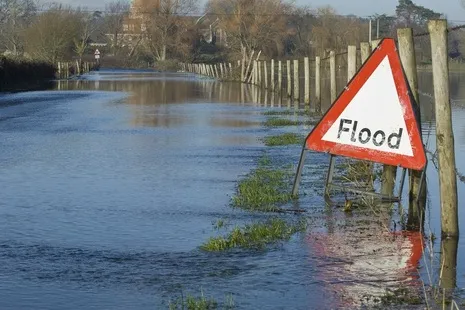 Photo: Environment Agency, via assets.publishing.service.gov.uk
This represents the institutionalisation of technocracy — the belief that complex policy questions are best left to experts rather than elected representatives. It's a philosophy that sounds reasonable until you examine who these 'experts' are and what they actually do with their power.
Ideology by Proxy
Quangos have become the preferred vehicle for advancing ideological agendas that might struggle at the ballot box. The Equality and Human Rights Commission pursues cases that redefine fundamental concepts like sex and marriage. Arts Council England channels millions toward projects that explicitly promote progressive causes. The Climate Change Committee sets legally binding carbon budgets based on contested economic modelling, effectively determining industrial policy without parliamentary scrutiny.
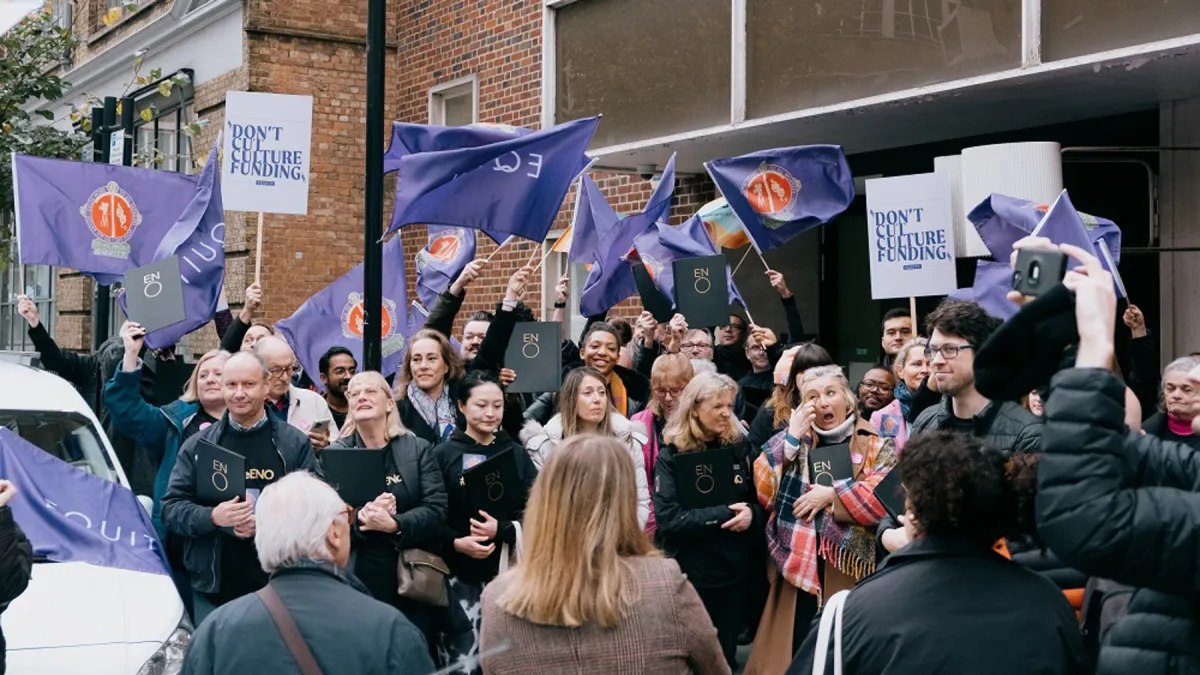 Photo: Arts Council England, via www.equity.org.uk
Successive governments have discovered that quangos offer the perfect solution to a democratic dilemma: how to advance controversial policies whilst maintaining plausible deniability. Ministers can claim they're simply following expert advice, whilst the experts claim they're merely implementing government policy. Accountability disappears in the space between these claims.
The Bonfire That Never Lit
David Cameron's coalition promised a 'bonfire of the quangos' that would restore democratic accountability and save taxpayers billions. The reality was pathetic: a few dozen minor bodies abolished, some mergers dressed up as cuts, and the overall quango state actually expanded. The promised savings of £2.6 billion never materialised. Instead, many abolished quangos simply had their functions transferred to other unaccountable bodies.
The failure wasn't accidental — it was structural. Whitehall discovered that quangos serve the administrative state's interests too perfectly to sacrifice. They provide prestigious positions for retiring civil servants, insulate controversial decisions from political pressure, and create the appearance of independent oversight whilst maintaining bureaucratic control.
Beyond Democratic Reach
The appointment process for quango leadership reveals the democratic deficit at its starkest. Board positions are filled through opaque processes dominated by the same narrow networks of professional directors, former civil servants, and approved academics. The result is a self-perpetuating class that shares similar educational backgrounds, career paths, and ideological assumptions.
Consider the composition of key regulatory bodies: Ofcom's board includes former BBC executives and Labour advisers. The Competition and Markets Authority is stuffed with competition lawyers who previously advised the companies they now regulate. These aren't conspiracies — they're the natural result of a system that prioritises insider credentials over democratic legitimacy.
The Cost of Unaccountability
Proponents argue that quangos provide necessary expertise and independence from political interference. This misses the fundamental point: in a democracy, political interference is called accountability. When unelected bodies make decisions affecting millions of lives and billions of pounds, that's not independence — it's oligarchy.
The economic costs are equally severe. Quangos face no competitive pressure and limited budget constraints. They gold-plate regulations, pursue pet projects, and expand their remits without regard for cost-effectiveness. The Homes and Communities Agency spent £3.2 billion on affordable housing programmes that delivered minimal results. The Skills Funding Agency burned through billions on training schemes that failed to improve productivity.
The Conservative Response
Genuine conservatives should recognise that the quango state represents everything they claim to oppose: unaccountable power, technocratic governance, and the substitution of expert opinion for democratic choice. Yet Conservative governments have consistently failed to tackle the problem, preferring cosmetic reforms to genuine abolition.
The solution isn't better quangos — it's fewer quangos. Functions that require genuine independence, like monetary policy, can remain at arm's length with proper parliamentary oversight. But most quango activities should return to government departments where ministers can be held accountable, or be abolished entirely where they serve no essential purpose.
Breaking the Technocratic Consensus
The quango state thrives because it serves the interests of Britain's governing class — politicians who can avoid responsibility, civil servants who can exercise power without scrutiny, and professional experts who can implement their preferences without democratic constraint. Breaking this consensus requires more than administrative reform; it demands a fundamental reassertion of democratic principles over technocratic convenience.
This isn't about efficiency or cost-saving, though both would follow. It's about whether Britain will be governed by people voters can remove or by an unelected administrative class that answers only to itself. The choice between democracy and technocracy has never been starker — and the Conservative Party's response will determine whether it deserves the name.
The quango state isn't a bug in Britain's democratic system — it's a feature designed to insulate power from accountability, and only radical surgery will restore government to the governed.