Silent Rationing: The NHS Is Already Deciding Who Gets Treated — It Just Won't Tell You
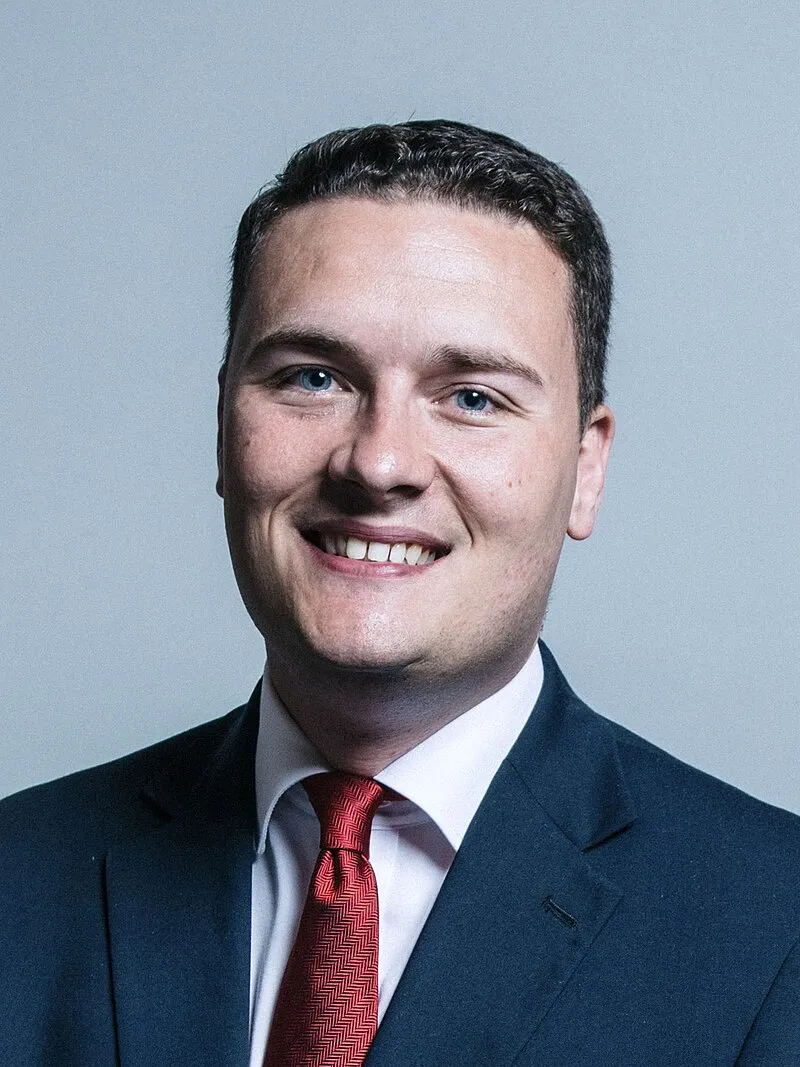
Photo of Wes Streeting, via Wikimedia Commons
The Announcement and the Reality
Keir Starmer came to office promising to "fix" the NHS. He appointed Wes Streeting as Health Secretary, a man who at least had the intellectual honesty to admit the service was broken, and the government duly announced billions in additional funding alongside a ten-year plan designed to shift care from hospitals to the community. The headlines were reassuring. The waiting lists, however, remain stubbornly north of six million. And behind the press releases, something rather less comfortable is taking shape.
Freedom of Information requests submitted by health journalists and campaign groups over the past eighteen months have revealed a pattern of behaviour that NHS England and the Department of Health have shown no appetite to discuss publicly. Individual trusts — under pressure to meet financial control totals set by NHS England — have been quietly adjusting the thresholds at which patients qualify for certain procedures. Referral criteria for hip replacements, cataract surgery, and some forms of bariatric treatment have been tightened. In several cases, the changes have not been announced, debated, or even formally documented in accessible policy papers. They have simply happened.
Whistleblower testimony collected by the Health Service Journal and independent patient advocacy organisations corroborates the picture. Clinical staff describe being asked to review referral pathways with an eye on cost reduction, and to document outcomes in ways that make de facto rationing harder to trace. One GP, speaking anonymously to a national outlet last year, described being told by their integrated care board that certain referral categories were "temporarily paused" — a phrase with no clinical meaning and considerable administrative convenience.
The Fiscal Arithmetic Nobody Will Confront
The reason this is happening is not complicated, even if the politics around it are. NHS England's budget for 2024-25 was set at approximately £165 billion — a figure that sounds extraordinary until you account for the accumulated backlog from the pandemic years, an ageing population whose care needs are compounding annually, and inflation in medical supplies and staffing costs that has consistently outpaced the general Consumer Price Index.
The Office for Budget Responsibility has warned repeatedly that health spending as a share of GDP will need to rise substantially over the coming decades simply to maintain current service levels. The Institute for Fiscal Studies has made similar projections. Neither the current government nor its predecessor has been willing to tell the electorate what that actually means in practice: either taxes rise significantly, or the NHS delivers less than it currently promises. There is no third option. There is no efficiency saving large enough to close the gap.
In the absence of an honest political conversation about this arithmetic, rationing happens anyway — it simply happens informally, inconsistently, and without democratic accountability. A patient in Surrey may receive a knee replacement that a patient in Sunderland is told they must lose more weight before qualifying for. The variation is not purely clinical. It is, in significant part, financial.
Why the Political Consensus Forbids Honesty
The strongest defence of the current approach is pragmatic rather than principled. Politicians on both sides of the aisle will argue that publicly acknowledging rationing would erode public confidence in the NHS, generate damaging headlines, and hand ammunition to those who wish to introduce greater private provision. Better, the argument runs, to manage scarcity quietly than to trigger a culture war about healthcare that nobody wins.
This is not an entirely unreasonable position. Public trust in institutions is fragile, and the NHS retains a near-devotional status in British political culture that makes rational debate about its limits extraordinarily difficult. Wes Streeting has been more candid than most health secretaries in recent memory, and has been rewarded with sustained attacks from his own backbenches for the trouble.
But the pragmatic case for silence has a serious flaw: the silence is not protecting patients. It is protecting politicians. When rationing decisions are made without transparency, patients cannot challenge them, clinicians cannot advocate effectively for their cases, and the public cannot make informed choices about what kind of health system they wish to fund. The result is not a kinder system — it is an unaccountable one.
What Honest Reform Would Require
Conservatives who believe in individual agency and institutional transparency should be leading this argument, not avoiding it. The case is not for dismantling the NHS — a position that commands approximately no electoral support and would be wrong on the merits in any case. The case is for an explicit, published, democratically accountable framework for what the NHS will and will not provide, updated regularly, and tied to a funding settlement that reflects actual costs.
Several European health systems operate on precisely this basis. The Netherlands and Germany maintain explicit benefit packages — lists of what the statutory system covers — that are subject to public consultation and parliamentary scrutiny. Neither country is regarded as having abandoned socialised medicine. Both are regarded as having more functional health systems than Britain's.
The political cost of this kind of transparency is real. The first government to publish an honest statement of NHS limitations will be accused of cutting services even if it is doing nothing of the sort. But the alternative — allowing invisible rationing to compound year on year while ministers stand at podiums talking about record investment — is not a sustainable position. It is a deception. And it is one that will eventually become impossible to maintain.
The NHS is already choosing who gets treated. The only question is whether those choices will be made openly, by design, with public consent — or in the dark, by administrative convenience, with nobody held to account.
The most dishonest thing in British politics today is not a lie about the NHS — it is the silence that substitutes for the truth.