The Triple Lock Taboo: Why Protecting Today's Pensioners Is Bankrupting Tomorrow's Workers

The Policy Nobody Will Touch
In the 2024 general election, both the Conservative Party and the Labour Party pledged to maintain the state pension triple lock. Neither was asked, in any serious way, to justify the long-term fiscal arithmetic underpinning that commitment. The triple lock — which guarantees the state pension rises each year by the highest of earnings growth, inflation, or 2.5 per cent — has become one of those political certainties that exists beyond scrutiny, like the NHS or the BBC licence fee in its prime. To question it is to invite accusations of callousness toward the elderly. To defend it, regardless of the cost, is to demonstrate that you are a serious electoral participant.
This is not serious politics. It is gerontocratic clientelism dressed up as compassion — and the people paying the price are the workers in their twenties and thirties who will fund an increasingly generous state pension while themselves having little prospect of owning a home, accumulating pension wealth of their own, or receiving anything remotely comparable when they eventually retire.
What the Triple Lock Actually Costs
The triple lock was introduced by the Coalition government in 2010, at a time when pensioner poverty was a genuine and well-documented problem. It was designed as a temporary corrective mechanism, not a permanent structural feature of the pension system. It became permanent because every government since has lacked the political fortitude to revisit it.
The fiscal consequences are now substantial. The state pension costs approximately £124 billion per year, making it the single largest item in the UK's social security budget — larger than housing benefit, child benefit, and unemployment support combined. The Office for Budget Responsibility has consistently flagged the long-term pressure that demographic ageing and the triple lock together place on public finances. The OBR's 2024 Fiscal Risks and Sustainability report projected that age-related spending pressures — of which pension costs are the dominant component — represent one of the most significant structural threats to long-run fiscal sustainability.
In the 2023-24 financial year, the triple lock triggered an 8.5 per cent increase in the state pension, driven by earnings growth. The full new state pension rose to £221.20 per week — a cash increase of more than £900 per year for every recipient. That is not a trivial sum. It is also not means-tested. It flows equally to pensioners living in poverty and to those with substantial private pension income, property wealth, and investment portfolios. The distributional logic of the triple lock has never been seriously examined, because to do so would be to acknowledge that it is not primarily a poverty-reduction mechanism. It is a universal benefit for an age cohort that happens to vote in very high numbers.
The Intergenerational Ledger
The uncomfortable truth that British politics refuses to confront is this: the triple lock is a mechanism for transferring wealth from younger, less wealthy, working-age taxpayers to older, on average wealthier, retired citizens — and it does so with no means-testing, no sunset clause, and no democratic mandate beyond the electoral arithmetic of an ageing population.
The Institute for Fiscal Studies has calculated that those born in the 1950s and 1960s — the primary beneficiaries of the triple lock's most generous years — have enjoyed housing wealth appreciation, final salary pension entitlements, and now index-linked state pension growth on a scale that is structurally unavailable to subsequent generations. Meanwhile, workers born after 1990 face a labour market characterised by higher housing costs relative to earnings, auto-enrolment defined contribution pensions that carry genuine investment risk, student loan obligations, and an effective marginal tax rate — once national insurance, income tax, and student loan repayments are aggregated — that in many cases exceeds 40 per cent for middle earners.
This is not a natural economic outcome. It is the product of political choices, sustained over decades, that have consistently prioritised one age cohort over another because one age cohort votes more reliably.
The Conservative Principle at Stake
There is a specifically conservative argument for reform that has nothing to do with hostility toward the elderly and everything to do with fiscal honesty. The conservative tradition — at its most serious — holds that no generation has the right to mortgage the prosperity of those who come after it. Edmund Burke's concept of society as a partnership between the living, the dead, and the yet to be born is not merely a philosophical flourish. It is a statement about intergenerational obligation that cuts directly against a policy which locks in spending commitments to one generation at the expense of another.
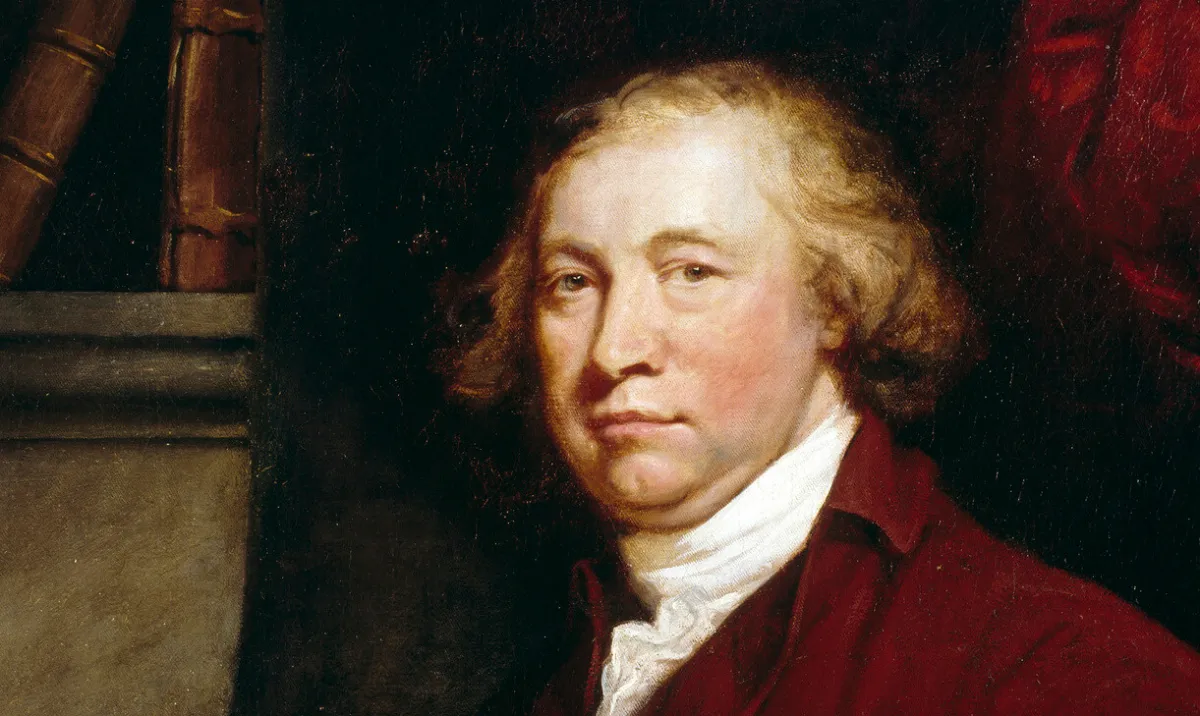 Photo: Edmund Burke, via sivilisasjonen.no
The strongest version of the pro-triple lock argument is that pensioner poverty is real, that many pensioners have modest or no private income, and that the state pension is their primary financial resource. This deserves to be taken seriously. But the solution to pensioner poverty is not an untargeted universal uplift that benefits wealthy retirees as much as poor ones. It is a properly funded, means-aware pension credit system combined with a state pension that rises in line with earnings — which is itself a generous settlement — rather than whichever of three metrics produces the highest number in any given year.
What Honest Reform Looks Like
No responsible commentator is suggesting the abolition of the state pension or a sudden freeze in benefits for people who have organised their retirement around existing commitments. The political and moral case for protecting those already in receipt of the pension, and those within a decade of receiving it, is strong.
But a phased transition — perhaps moving to a double lock of earnings and inflation for those currently under fifty-five, while maintaining the triple lock for existing recipients — would be fiscally responsible, politically defensible with honest communication, and generationally fair. The savings, projected over a decade, would be substantial: the Resolution Foundation has estimated that abolishing the 2.5 per cent floor alone would save several billion pounds per year by the early 2030s.
The reason this does not happen is not that the arguments are weak. It is that the electoral incentive structure punishes honesty and rewards deference. Pensioners vote. Young renters, statistically, do not — or do not do so in the numbers that move marginal constituencies.
Until a party is willing to make the generational case explicitly, to treat younger voters as citizens with a legitimate fiscal stake in long-term policy rather than an afterthought, the triple lock will remain untouchable — and the bill will keep compounding, quietly, on a generation that never voted for it.
Fiscal courage is not cruelty; it is the only honest form of respect for the people who will be left to pay the debt.