Two-Tier Policing Is Not a Conspiracy Theory — It's Government Policy in All But Name
The footage speaks for itself. Climate activists glue themselves to motorways, block ambulances, and vandalise priceless artworks — often with police standing by like bemused spectators. Meanwhile, farmers protesting inheritance tax changes find themselves kettled, searched, and warned about "public order offences" before they've so much as raised a placard. This is not selective perception or partisan grievance. It is documented, systematic, and fundamentally corrosive to the rule of law.
The Evidence Is Overwhelming
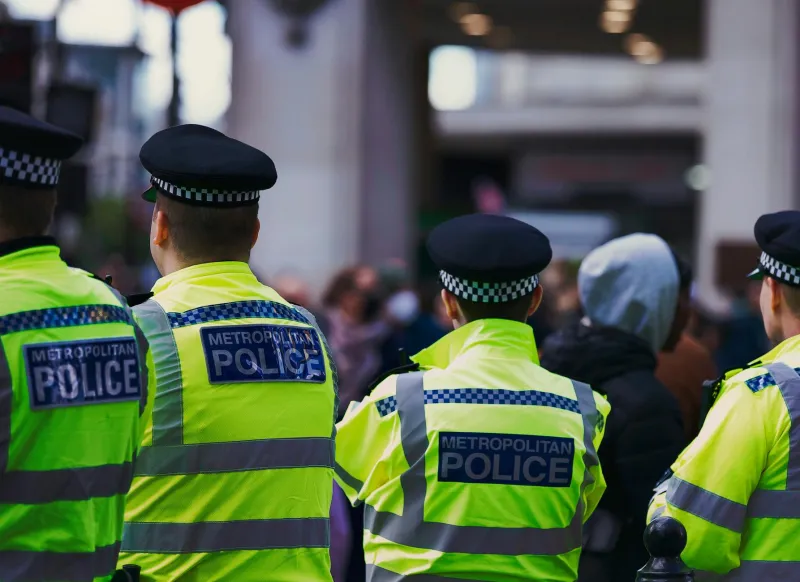
Consider the stark contrast in policing approaches witnessed across 2023 and 2024. Just Stop Oil protesters have repeatedly blocked major roads, causing delays to emergency services and costing the economy millions in lost productivity. The Metropolitan Police response? Largely passive, with officers often facilitating rather than preventing these disruptions. Compare this to the heavy-handed treatment of farmers demonstrating against Labour's inheritance tax raid on agricultural land, where police deployed extensive resources to contain what were overwhelmingly peaceful protests.
The disparity becomes even more pronounced when examining the policing of pro-Palestine marches versus Remembrance Sunday commemorations. Weekly pro-Palestine demonstrations have proceeded largely unimpeded through central London, despite frequent instances of inflammatory chanting and displays that would, in other contexts, constitute clear breaches of public order. Yet when counter-protesters or those defending war memorials have gathered, they face immediate police intervention and arrest.
Selective Enforcement Corrodes Justice
This is not about the merits of any particular cause — it is about the fundamental principle that the law must apply equally to all citizens, regardless of their political sympathies. When police forces begin picking and choosing which laws to enforce based on the perceived righteousness of the cause, they cease to be law enforcement agencies and become political actors.
The Metropolitan Police's own statistics reveal this disparity starkly. Environmental protesters have been arrested at dramatically lower rates per incident than those involved in counter-demonstrations or traditional conservative causes. Freedom of Information requests have shown that police resources allocated to monitoring and containing right-of-centre protests consistently exceed those deployed against left-wing demonstrations of comparable size.
Conservative Politicians Have Failed to Lead
Perhaps most damaging has been the failure of Conservative politicians to name this phenomenon clearly. Too many have retreated into mealy-mouthed statements about "operational independence" when confronted with evidence of two-tier policing. This abdication of leadership has allowed the problem to metastasise unchecked.
The Police and Crime Commissioners, supposedly the democratic link between policing and the public, have been notably silent on these disparities. Where are the questions about resource allocation? Where are the demands for consistent application of public order laws? The silence is deafening and complicit.
The Institutional Capture Problem
This selective enforcement reflects a deeper problem of institutional capture within Britain's police forces. Senior officers increasingly view their role through the lens of social justice activism rather than impartial law enforcement. Training programmes emphasising "unconscious bias" and "inclusive policing" have created a culture where officers second-guess their duties based on the perceived social status of different groups.
The College of Policing's guidance documents reveal this thinking explicitly, encouraging officers to consider the "historical context" and "power dynamics" when making enforcement decisions. This is not policing — it is sociology with handcuffs.
Democracy Requires Equal Treatment
The stakes could not be higher. Public trust in policing is already at historic lows, with confidence in the Metropolitan Police having plummeted following a series of scandals. Two-tier policing accelerates this decline by convincing ordinary citizens that the law is not applied fairly to all.
When people lose faith that the rules apply equally, they stop following them voluntarily. Social cohesion depends on the shared belief that we are all subject to the same laws, enforced by the same standards. Once that compact breaks down, we are no longer a society governed by law but by power and political preference.
The Path Forward
Restoring public confidence requires immediate action. Police and Crime Commissioners must demand clear protocols for consistent enforcement across all protests and demonstrations. Chief Constables must be held accountable for disparities in their forces' responses to different groups. Most importantly, political leaders must stop hiding behind "operational independence" and start demanding that the law be applied equally.
This is not about suppressing legitimate protest — it is about ensuring that all protesters, regardless of their cause, face the same rules and the same consequences for breaking them. Equal treatment under the law is not a culture war talking point; it is the bedrock of free society, and it is crumbling beneath our feet.