The Voter ID U-Turn Nobody Is Talking About — And What It Tells Us About Labour's Relationship With Electoral Integrity
While the media focuses on headline-grabbing political dramas, a quieter but more revealing story is unfolding around voter identification requirements. Since taking office, Labour ministers have begun signalling their intention to "review" or significantly water down the voter ID rules introduced by the previous Conservative government. This isn't just another policy reversal—it's a window into Labour's fundamental attitude toward electoral integrity and democratic legitimacy.
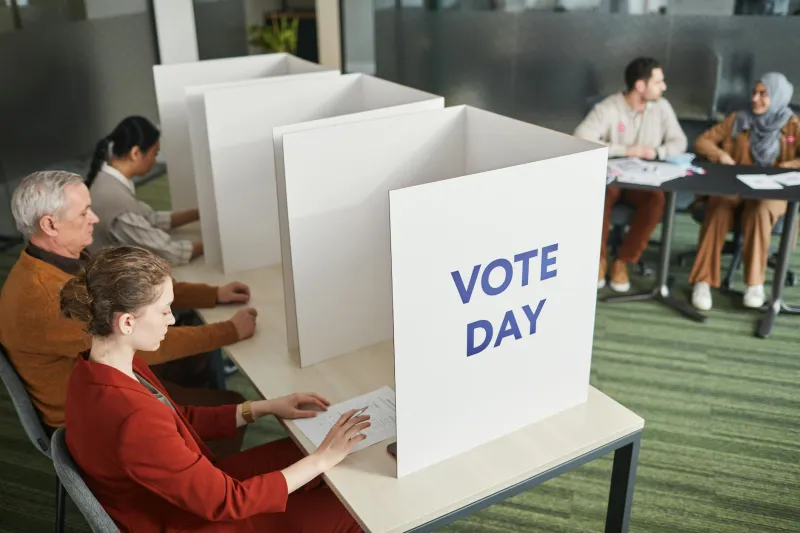
The Conservative government's requirement for photo identification at polling stations, implemented for the 2023 local elections and the 2024 general election, was hardly revolutionary. Most democratic countries around the world require some form of voter identification as a basic safeguard against electoral fraud. Yet Labour has consistently opposed these measures, framing them as "voter suppression" while offering little credible explanation for why Britain should be uniquely vulnerable to verification requirements that work elsewhere.
The International Standard
Voter identification is the norm, not the exception, in established democracies. Canada requires photo ID or two pieces of authorised identification. France mandates photo ID for all elections. Germany, Sweden, the Netherlands, and Switzerland all have similar requirements. Even India, the world's largest democracy, successfully implements voter ID for over 900 million eligible voters.
The idea that requiring identification to vote is somehow anti-democratic or discriminatory is peculiarly British—or more accurately, peculiarly Labour. These requirements work smoothly in countries with diverse populations, varying income levels, and different political systems. The notion that British voters are uniquely incapable of obtaining identification that most already possess for everyday activities is both patronising and implausible.
The Electoral Commission's own research showed that 98% of voters already possessed acceptable forms of identification before the new requirements were introduced. For the small minority without ID, free voter identification certificates were made available through local councils. The practical barriers to voting were minimal, yet Labour's opposition remained absolute.
 Photo: Electoral Commission, via seeklogo.com
The Voter Suppression Myth
Labour's primary argument against voter ID centres on claims of voter suppression, particularly affecting minority communities and the elderly. This talking point, imported wholesale from American Democratic Party rhetoric, doesn't withstand scrutiny in the British context.
Turnout data from the 2023 local elections and 2024 general election shows no evidence of systematic voter suppression. While there were isolated cases of voters being turned away for lack of ID, the numbers were tiny relative to overall turnout and often involved voters who chose not to return with identification rather than being permanently disenfranchised.
Moreover, the "voter suppression" argument assumes that minority communities are inherently less capable of obtaining identification—an assumption that would be considered deeply offensive if made in any other context. The reality is that photo ID is already required for numerous everyday activities, from opening a bank account to collecting a parcel from the Post Office. The idea that these same communities are uniquely burdened by electoral verification requirements doesn't reflect lived experience.
The Fraud Denial Problem
Labour consistently downplays concerns about electoral fraud, arguing that proven cases are rare and that voter ID is a solution in search of a problem. This argument fundamentally misunderstands both the nature of electoral fraud and the purpose of verification systems.
The absence of prosecuted fraud cases doesn't prove fraud doesn't occur—it may simply indicate that current detection methods are inadequate. Voter impersonation, the specific type of fraud that ID requirements address, is inherently difficult to detect without verification systems. A fraudulent voter who successfully impersonates someone else leaves no obvious trace of wrongdoing.
More importantly, electoral integrity isn't just about preventing fraud—it's about maintaining public confidence in democratic processes. Opinion polling consistently shows that large majorities of voters support ID requirements, viewing them as common-sense safeguards rather than bureaucratic obstacles. Labour's opposition puts the party at odds with mainstream public opinion on a fundamental question of democratic legitimacy.
The Tower Hamlets Factor
The reality of electoral fraud in Britain is more complex than Labour suggests. The case of Tower Hamlets, where the 2014 mayoral election was declared void due to widespread fraud and intimidation, demonstrated that serious electoral misconduct can occur in British democracy. While voter impersonation wasn't the primary issue in Tower Hamlets, the case illustrated how electoral fraud can undermine democratic legitimacy when verification systems are inadequate.
 Photo: Tower Hamlets, via shop.thisismikehall.com
Similar concerns have been raised about postal voting fraud, which remains largely unaddressed by existing safeguards. The combination of weak verification for postal votes and opposition to in-person ID requirements creates a system that's vulnerable to abuse while making detection difficult.
The Electoral Commission has documented numerous cases of electoral fraud across different types of elections, from local council races to parliamentary contests. While the scale may be limited, the existence of proven fraud cases demonstrates that the risk is real, not theoretical.
The Democratic Principle
Beyond practical considerations, voter ID requirements reflect a fundamental democratic principle: the right to vote is so important that it's worth verifying who is exercising it. This isn't about creating barriers to participation—it's about ensuring that participation is legitimate and that every genuine vote counts equally.
The same principle applies to other democratic processes. Political parties require membership verification before allowing participation in leadership elections. Trade unions verify membership before conducting ballots on industrial action. The idea that general elections, the foundation of democratic government, should operate with less verification than a local club election is perverse.
Labour's opposition to basic verification measures suggests a party more concerned with maximising turnout—regardless of legitimacy—than ensuring electoral integrity. This attitude is particularly concerning given the party's simultaneous support for expanding postal voting and other measures that could facilitate fraud while opposing safeguards that might prevent it.
The Broader Pattern
Labour's stance on voter ID fits into a broader pattern of resistance to electoral reforms that might disadvantage the party. From opposing constituency boundary reviews that would equalise voter numbers to resisting measures against postal vote fraud in areas where Labour depends on community vote harvesting, the party consistently opposes changes that might level the electoral playing field.
This isn't necessarily conscious strategy—it may simply reflect institutional preferences that favour current arrangements. But the cumulative effect is a party that appears more interested in electoral advantage than electoral integrity, more concerned with winning than with ensuring that victories are legitimate.
The Path Forward
The Conservative government's voter ID requirements were modest and reasonable, implementing standards that are routine in other democracies. Labour's determination to reverse these measures reveals priorities that should concern anyone who values democratic legitimacy over partisan advantage.
Rather than watering down verification requirements, Britain should be strengthening them. This means maintaining photo ID requirements for in-person voting while extending similar verification to postal ballots, where fraud risks are actually higher. It means investing in detection systems that can identify suspicious patterns of voting behaviour. And it means treating electoral integrity as a bipartisan priority rather than a partisan weapon.
The health of British democracy depends on public confidence that elections are fair, transparent, and secure. Labour's opposition to basic verification measures undermines that confidence while sending a clear message about the party's priorities.
Any party that fights harder against knowing who is voting than against people voting illegitimately has revealed everything voters need to know about its commitment to democratic integrity.