The Green Belt Guilt Trip: How Environmentalists Captured the Planning Debate — and Priced a Generation Out of Home Ownership

Labour's manifesto promise to build 1.5 million new homes over five years sounds bold, but the same environmental pressure groups that helped create Britain's housing crisis under Conservative governments are already mobilising to strangle supply once again. Through biodiversity net gain requirements, nutrient neutrality rules, and an ever-expanding web of heritage designations, well-funded green NGOs have effectively weaponised planning law to preserve the countryside for those already fortunate enough to own a slice of it — while condemning young families to a lifetime of renting.
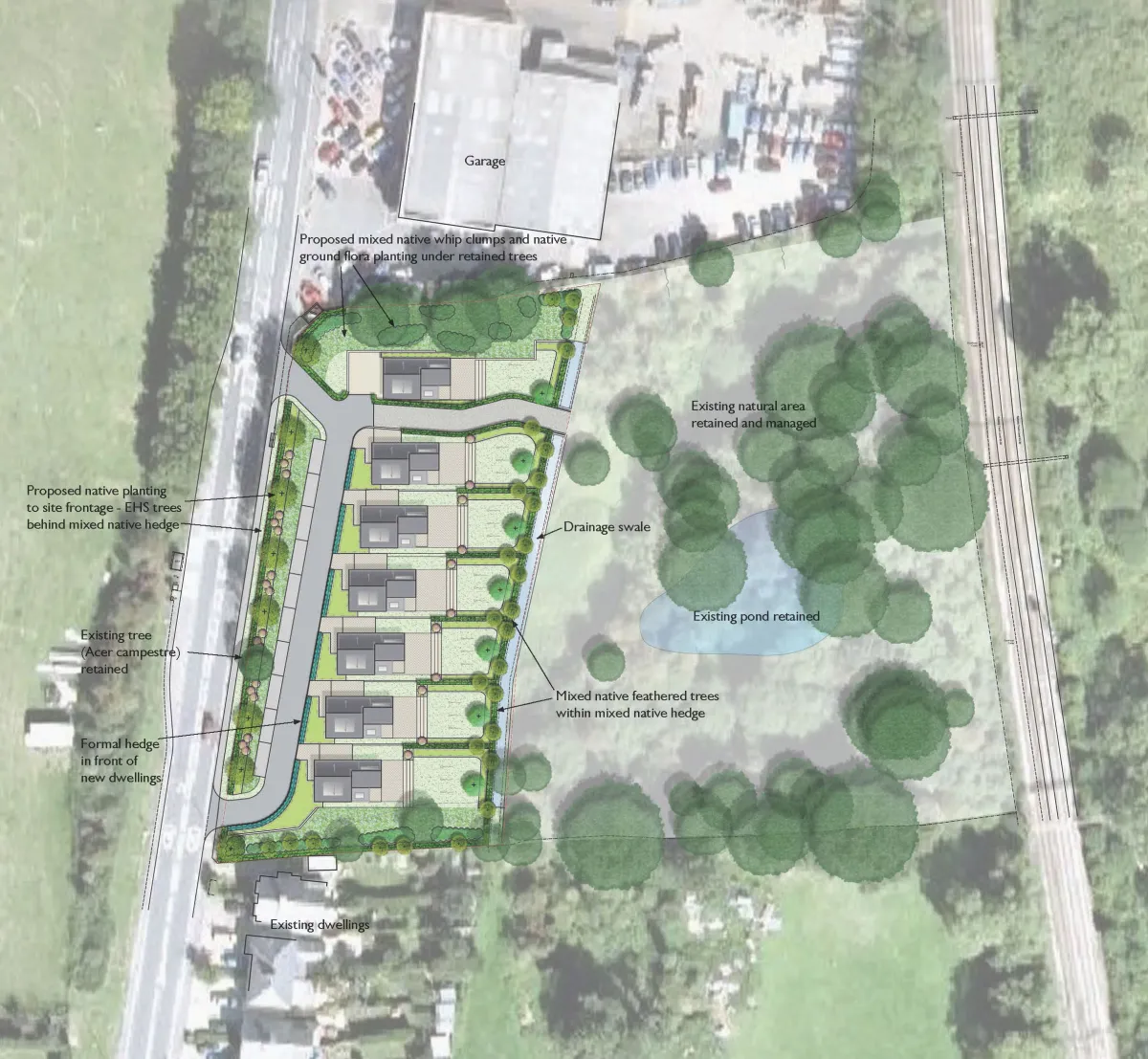 Photo: Green Belt, via indigolandscape.co.uk
The Green Veto Machine
The numbers tell the story of institutional capture. Natural England, the government's statutory nature conservation body, has blocked or delayed thousands of housing developments through its nutrient neutrality guidance, which requires developers to prove their projects won't increase pollution in nearby rivers. What sounds reasonable in principle has become a blanket ban in practice, with entire local authority areas effectively closed to new housing.
 Photo: Natural England, via c8.alamy.com
In areas covered by these rules — including much of the South East where housing pressure is most acute — planning permissions have fallen by up to 40%. The Home Builders Federation estimates that nutrient neutrality requirements alone have prevented 120,000 homes from being built since 2019. That's 120,000 families who might have been homeowners instead condemned to the rental market.
Meanwhile, biodiversity net gain rules, which came into force in February 2024, require all new developments to demonstrate a 10% improvement in biodiversity value. In theory, this can be achieved on-site or through offsetting schemes. In practice, it adds months to planning timelines and thousands to development costs — costs that are inevitably passed on to buyers.
The Heritage Racket
Historic England, another arms-length government body, has proven equally adept at finding reasons to block development. The organisation's definition of 'heritage assets' has expanded far beyond genuinely historic buildings to include post-war housing estates, industrial buildings, and even car parks. In 2023 alone, Historic England objected to over 3,000 planning applications, with success rates that suggest local planning committees rarely dare to overrule their guidance.
 Photo: Historic England, via constructionmaguk.co.uk
The Village Green registration process provides another route for development opponents to tie up schemes in legal challenges. Under the Commons Act 2006, any member of the public can apply to register land as a Town or Village Green if they can demonstrate 20 years of recreational use 'as of right'. These applications automatically halt development while they are considered — a process that can take years and cost developers hundreds of thousands in holding costs.
Following the Money
Behind these bureaucratic barriers lies a network of environmental groups with combined annual revenues exceeding £500 million. The Campaign to Protect Rural England (CPRE), Friends of the Earth, and the Woodland Trust have mastered the art of regulatory capture, placing their alumni in key positions within government agencies and local authorities.
CPRE alone employs 60 full-time staff and spends £4 million annually on campaigns that consistently oppose housing development. Their 'Countryside Charity' branding disguises what is essentially a property protection racket for existing homeowners who want to pull up the drawbridge behind them.
These organisations have also perfected the art of forum shopping, using judicial review challenges to overturn planning decisions they dislike. Between 2019 and 2023, environmental groups initiated over 200 judicial reviews of housing developments, with costs typically exceeding £50,000 per case even when they lose.
The Progressive Alibi
Environmentalists defend their position by arguing that Britain needs to protect its remaining green spaces from urban sprawl. They point to climate change, biodiversity loss, and the value of countryside access as justifications for ever-stricter planning controls.
This argument might carry more weight if the same groups showed any enthusiasm for brownfield development or urban densification. Instead, they oppose tall buildings as 'out of character', object to conversions of office space as 'overdevelopment', and campaign against infrastructure projects that would enable more efficient land use.
The uncomfortable truth is that environmental opposition to development is often a middle-class luxury belief — easy to hold when you already own a £500,000 house in a desirable area, less appealing when you're paying £1,800 a month for a one-bedroom flat in Zone 4.
The Conservative Case for Building
True conservatism recognises that property ownership is the foundation of a stable society. When young people cannot afford to buy homes, they cannot build wealth, start families, or put down roots in their communities. They become permanent dependents on landlords and welfare systems instead of stakeholders in the country's future.
The green belt, created in the 1940s when Britain's population was 50 million, now covers 13% of England while housing a population of 56 million. Much of this land is neither particularly beautiful nor ecologically valuable — it's simply agricultural fields that happen to sit within commuting distance of cities where people want to live and work.
Conservatives should not be afraid to challenge environmental orthodoxy when it conflicts with human flourishing. The current planning system is a machine for creating scarcity, driving up asset prices for existing owners while excluding the next generation from property ownership entirely.
Breaking the Green Stranglehold
Labour's housing targets will remain fantasy unless the government is willing to confront the environmental lobby that has captured the planning system. This means reforming nutrient neutrality rules, streamlining biodiversity requirements, and introducing time limits on heritage objections.
More fundamentally, it means recognising that the current system serves the interests of existing property owners at the expense of aspiring ones — and that no amount of environmental virtue signalling can justify condemning a generation to permanent tenancy.
The green belt guilt trip has run its course, and it's time to choose between preserving the countryside views of the already-housed and giving young families a stake in society.