Government by Corridor: The SpAd Explosion and the Parallel State Nobody Elected

The People Running Britain You've Never Heard Of
If you wanted to understand how a major government policy was shaped, you might look at the minister who announced it, the civil servants who drafted it, or the parliamentary committee that scrutinised it. You would be looking in the wrong places. Increasingly, the decisions that matter — what goes in the manifesto, how a crisis is framed, which departmental priorities survive a spending review, which journalist gets the briefing and which gets frozen out — are made by a class of political operative who holds no elected office, appears before no select committee, and is accountable to Parliament in no meaningful sense.
These are the Special Advisers: the SpAds. And under the current government, their reach has never been wider.
The Numbers, and What They Hide
The Cabinet Office publishes an annual list of Special Advisers and their salary bands. As of the most recent data, the total number of SpAds across Whitehall sits at around ninety to one hundred individuals, at a combined cost to the taxpayer of several million pounds per year. These figures are, in one sense, transparently available. In every other sense, they reveal almost nothing.
The published list tells you who exists. It does not tell you what they do, which decisions they influenced, which civil service advice they overrode, or which ministerial positions they effectively authored. It does not tell you which SpAds have informal reach far beyond their nominal department, or which ones serve as the Prime Minister's eyes and ears in ministries whose secretaries of state are not regarded as fully trusted. The salary band tells you roughly what they cost. It tells you nothing about what they are worth — or what they are costing in terms of democratic accountability.
Under the current administration, several senior SpAds are understood to command influence that rivals or exceeds that of permanent secretaries in their respective departments. This is not a new phenomenon — Alastair Campbell under Blair, Nick Timothy and Fiona Hill under May, Dominic Cummings under Johnson, all became figures of significant public controversy precisely because their power was visible. What is different now is that the exercise of SpAd power has become more diffuse, more embedded in departmental culture, and correspondingly harder to scrutinise or challenge.
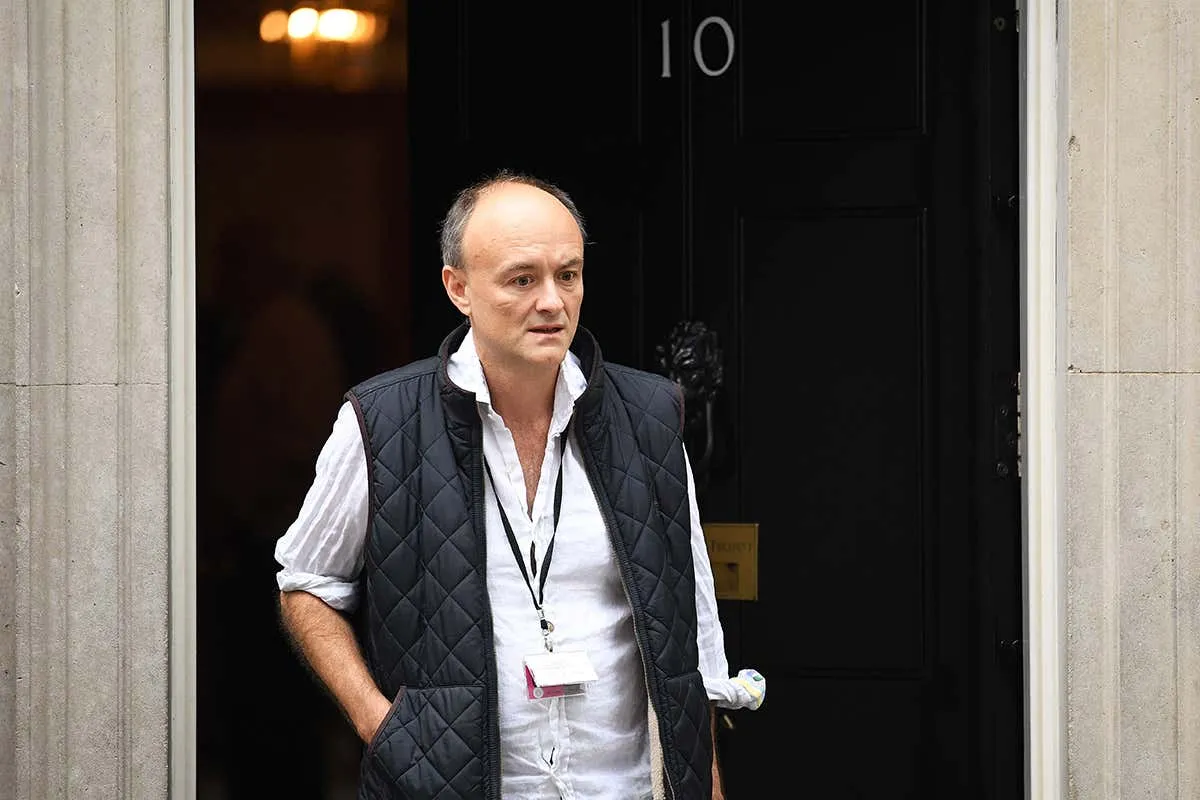 Photo: Dominic Cummings, via images.newscientist.com
 Photo: Alastair Campbell, via c8.alamy.com
How the SpAd Class Was Born — and How It Grew
Special Advisers have a formal legal basis in the Constitutional Reform and Governance Act 2010, which codified their status as a distinct category of temporary civil servant exempt from the normal requirements of political neutrality. Before this, they operated under the somewhat thinner authority of the Civil Service Order in Council. Their original rationale was straightforward and not unreasonable: ministers arrive in departments staffed by career civil servants who serve all governments impartially. A minister needs political staff who share their objectives, who can translate political priorities into departmental action, and who can manage the interface with the party and the media without compromising the civil service's institutional neutrality.
In this limited form, the SpAd is a sensible constitutional device. The problem is that the device has metastasised. What began as a small number of political aides — Margaret Thatcher's government had fewer than ten across the whole of Whitehall — has become a substantial cadre of political operatives embedded throughout the machinery of state. And as their numbers have grown, so has their ambition: from advising ministers to directing civil servants, from managing media to shaping policy, from facilitating political decisions to effectively making them.
 Photo: Margaret Thatcher, via richard-reid.com
The Civil Service in the Crossfire
The relationship between SpAds and the senior civil service is one of the least examined and most consequential fault lines in British government. Permanent secretaries and senior officials are, in theory, protected from political direction by their professional codes and institutional independence. In practice, a powerful SpAd with the Prime Minister's ear can make a senior civil servant's professional life extremely uncomfortable without ever issuing a formal instruction.
The phenomenon of 'glacial obstruction' — where civil servants slow-walk policies they disagree with — is real and documented, and it is one reason why incoming governments often feel the need to strengthen their SpAd operations. But the response has created its own pathology. When SpAds bypass the senior civil service on major policy decisions, the institutional knowledge and professional scepticism that the civil service exists to provide is lost. The result is policy made faster, but not better — and with no one outside the political circle positioned to say so until it goes wrong.
The Retained EU Law (Revocation and Reform) Act debacle, the repeated failures of the Rwanda deportation scheme's operational planning, and numerous other policy initiatives that looked coherent in a SpAd's briefing note but collapsed on contact with legal or practical reality all bear the fingerprints of a system in which political operators have too much influence over decisions that require institutional expertise.
The Accountability Gap
The strongest argument in favour of a robust SpAd system is that it makes government more politically responsive. Elected ministers should be able to direct the state; career bureaucrats should not be able to veto the democratic mandate. There is genuine force to this. The 'blob' — the institutional resistance of the civil service and its associated quangos to political direction — is a real phenomenon, not a paranoid fantasy. If SpAds help ministers cut through bureaucratic inertia and implement what voters elected them to deliver, they are serving a legitimate constitutional function.
But this argument assumes that SpAds are themselves accountable to the democratic process — that their power ultimately flows back to an elected minister who answers to Parliament. Increasingly, this assumption does not hold. When a SpAd shapes a policy that a minister announces, the minister is accountable for the policy but may have limited understanding of how it was developed. When a SpAd directs a departmental communications strategy, no one in Parliament can question them about it. When a SpAd's relationship with a favoured journalist shapes the public narrative around a crisis, the accountability chain is entirely invisible.
Parliament has almost no formal mechanism for scrutinising SpAd conduct. Select committees can invite SpAds to give evidence, but cannot compel them in the same way as ministers or civil servants. The Ministerial Code governs SpAd behaviour in theory; in practice, enforcement is at the Prime Minister's discretion — which is to say, enforcement is political, not institutional.
A Conservative Reckoning
Conservatives should be instinctively suspicious of unaccountable concentrations of power in the executive, regardless of which party holds office. The SpAd system, in its current form, represents exactly that. It concentrates influence in a small group of politically appointed operatives who are selected on the basis of personal loyalty and ideological alignment, who operate with minimal transparency, and who are funded by the taxpayer without meaningful taxpayer oversight.
The remedy is not abolition — a minister without political staff is a minister at the mercy of the institutional agenda of their department. The remedy is transparency and accountability: full publication of SpAd responsibilities and reporting lines; a formal right for select committees to compel SpAd testimony on matters of policy; a statutory cap on SpAd numbers that requires primary legislation to exceed; and a strengthened independent complaints mechanism that does not route through the Prime Minister's own office.
Britain's constitutional settlement is built on the idea that power exercised in the name of the Crown must be exercised through accountable institutions. The SpAd class, as currently constituted, is power exercised in the name of the government but outside any institution that Parliament can meaningfully reach.
A democracy in which the people who actually run the country are selected in private, funded in public, and answerable to nobody is not a democracy with a staffing problem — it is a democracy with a structural one.