Development Spending as a Migration Accelerant: The Aid Budget That Funds the Journey, Not the Return

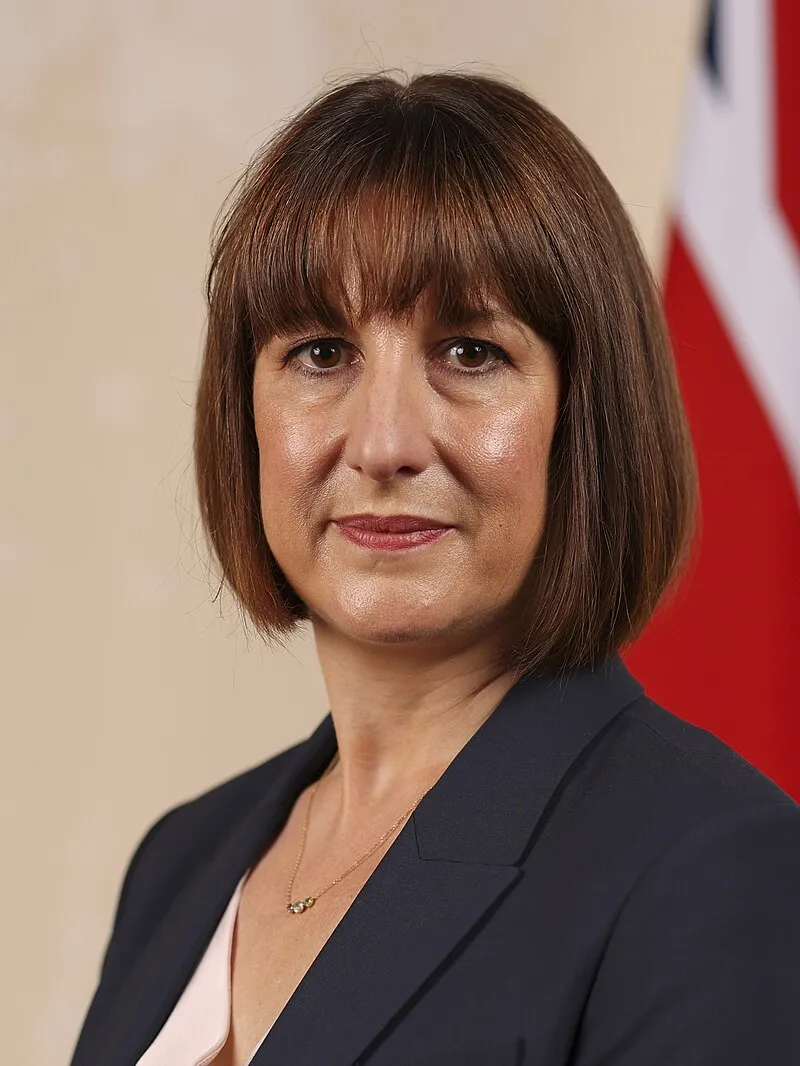
Photo of David Lammy, via Wikimedia Commons
The Promise That Never Quite Delivers
For decades, the intellectual justification for Britain's overseas development budget has rested on a single, seductive proposition: invest in the countries people flee from, and fewer people will feel compelled to leave. It is a theory that sounds reasonable at a dinner party, commands broad cross-party support in the House of Commons, and has the additional virtue of making those who advocate it feel morally serious. There is only one significant problem with it. The evidence that it works is, at best, contested — and at worst, points in precisely the opposite direction.
In the financial year 2023–24, the United Kingdom's Official Development Assistance (ODA) spending stood at approximately £15.2 billion, representing around 0.58 per cent of gross national income, according to figures published by the Foreign, Commonwealth and Development Office. The government has repeatedly signalled its ambition to return to the 0.7 per cent statutory target enshrined in the International Development (Official Development Assistance Target) Act 2015 — a target that would push annual expenditure well beyond £17 billion at current GNI levels. Meanwhile, net migration to the United Kingdom reached 728,000 in the year to June 2023, a record high, before moderating somewhat in subsequent quarters. The trajectory of aid spending and the trajectory of migration flows have, over the long run, moved in tandem rather than in opposition.
What the Research Actually Shows
The academic literature on the relationship between development assistance and emigration is more complicated than either side of this debate tends to acknowledge. The strongest version of the pro-aid argument draws on the so-called migration hump theory, associated with economist Gordon Hanson and others, which holds that development spending initially increases emigration by giving people the financial means to move before eventually, at higher income levels, reducing the incentive to leave. If that theory is correct — and it has empirical support — then the current strategy of channelling billions into lower-middle-income countries such as Nigeria, Pakistan, and Ethiopia is not reducing migration pressure in any near-term timeframe. It may, in fact, be subsidising it.
A 2018 paper published in the journal World Development found that aid flows to developing countries were positively correlated with emigration in the short to medium term, particularly where governance was weak and institutional capacity limited. The OECD has similarly acknowledged that the relationship between aid and migration is non-linear and highly context-dependent. None of this is to suggest that poverty reduction is undesirable as a global objective. It is to suggest that using the aid budget as a migration management tool — which is precisely how successive British governments have framed it — rests on empirical foundations that are far shakier than ministers routinely imply.
Where the Money Actually Goes
The more politically uncomfortable question is not whether aid reduces migration, but where the money goes in the meantime. A substantial proportion of the FCDO's ODA budget flows not directly to recipient governments or communities, but through a dense ecosystem of international NGOs, multilateral institutions, and private consultancy firms. In 2022–23, the FCDO disbursed over £1.4 billion through multilateral channels including the World Bank and United Nations agencies, and a further significant share through contracted delivery partners whose administrative overheads are not always transparently reported.
The Public Accounts Committee has previously raised concerns about value for money in FCDO programme delivery, noting in successive reports that the department struggles to demonstrate measurable outcomes relative to expenditure. The National Audit Office's 2023 review of FCDO financial management found persistent weaknesses in results monitoring and contractor oversight. This is not a picture of strategic investment in source-country stability. It is a picture of institutionalised spending with diffuse accountability and comfortable rent extraction for those positioned to navigate the procurement landscape.
The Conservative Reframe
The left's response to this critique is predictable: any scepticism about aid spending is dismissed as isolationism, indifference to global poverty, or — the preferred rhetorical escalation — racism by implication. This is a lazy deflection that should be engaged with directly rather than avoided.
The conservative case against the current aid model is not a case against helping poorer countries. It is a case against ineffective spending dressed up as altruism, against a departmental culture that measures success by disbursement rather than impact, and against the use of a politically untouchable budget line to sustain an advocacy sector that lobbies for its own expansion. There is nothing compassionate about spending £15 billion a year in ways that do not demonstrably improve conditions in source countries, do not reduce migration pressures, and divert resources from domestic priorities including border security infrastructure, integration services for those already here, and the public services that receive migration's downstream demands.
A genuinely conservative foreign development policy would be far more selective: bilateral agreements with specific, measurable outcomes; direct budget support conditional on governance benchmarks; and a frank acknowledgement that some of the countries receiving British aid have governments that are actively uninterested in the reforms that would make emigration less attractive. Rewarding dysfunction with unconditional transfers is not solidarity — it is the institutionalisation of failure.
The Political Calculation Westminster Won't Name
There is, of course, a domestic political calculation embedded in the current approach that rarely surfaces in parliamentary debate. The aid budget, once ring-fenced by statute, becomes an almost frictionless channel for spending that satisfies an international audience, pleases an NGO sector with significant media reach, and insulates ministers from accusations of insularity — all without delivering measurable domestic benefit. It is, in that sense, a perfect example of the performative governance that Westminster Edge exists to challenge: policy designed to be seen to care rather than to achieve anything in particular.
The government's recent review of ODA priorities, conducted under Foreign Secretary David Lammy, has emphasised a shift toward spending that serves British foreign policy interests more directly. That is a welcome instinct. But the structural incentives of a department that defines its success by the volume of money disbursed, and is evaluated against a statutory percentage target, work powerfully against genuine reform. Until the 0.7 per cent target is either repealed or radically reframed around outcomes rather than inputs, the aid budget will continue to function as a subsidy to the development industry rather than a serious instrument of statecraft.
Spending billions to address the root causes of migration while migration reaches record highs is not a policy — it is an alibi.