Frozen Out: The Threshold Trap That Is Quietly Picking Every Working Household's Pocket
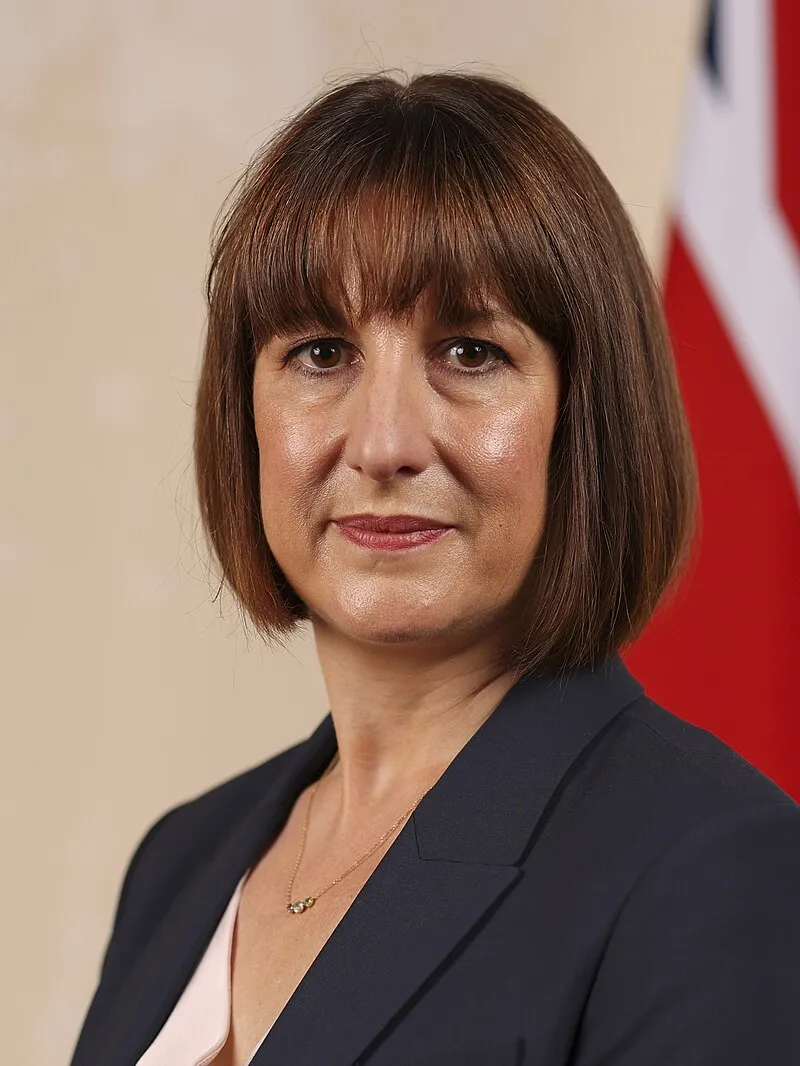
Photo of Rachel Reeves, via Wikimedia Commons
The Tax Rise That Dare Not Speak Its Name
In the Spring Budget of 2021, then-Chancellor Rishi Sunak announced that income tax thresholds would be frozen at their existing levels until April 2026. At the time, with inflation running below two per cent and the economy still absorbing the shock of the pandemic, the fiscal impact appeared modest. The Office for Budget Responsibility estimated the measure would raise approximately £8 billion annually by the mid-2020s. What followed was an inflationary surge that transformed a moderate revenue measure into one of the largest effective tax increases in post-war British history — without a single vote being cast to raise a single rate.
By the time the current Parliament was elected, inflation had driven the consumer price index up by over twenty per cent from its pre-pandemic baseline. Wages, particularly in the public sector and in lower-paid private employment, followed — partially and with a lag, but followed nonetheless. The consequence was mechanically inevitable: as nominal incomes rose, frozen thresholds meant that a larger share of earnings was exposed to income tax, and a larger number of workers crossed into higher rate territory. The government collected more tax from every worker who received a pay rise, without changing any headline rate and without requiring Parliament to pass a single amending clause.
The Numbers Behind the Silence
The scale of what has occurred deserves to be stated plainly. According to HMRC data and OBR projections published in the March 2024 Budget documentation, the number of higher-rate taxpayers — those paying forty pence in the pound on earnings above the frozen £50,270 threshold — is projected to reach approximately 6.3 million by 2027–28, up from around 4.2 million in 2019–20. That represents a fifty per cent increase in the higher-rate taxpayer population over roughly eight years, driven not by deliberate policy to broaden the tax base at higher incomes, but by the passive interaction of frozen thresholds and rising prices.
The personal allowance — the income level below which no income tax is paid — has been fixed at £12,570 since April 2021. Had it been uprated with CPI inflation at the same rate as prices rose between 2021 and 2024, it would stand at approximately £14,900. The difference represents taxable income that workers are now paying twenty pence on that they would not have paid under an indexed system. For a worker earning £25,000, the cumulative effect over the freeze period amounts to several hundred pounds annually in additional tax liability — not because their real living standard improved, but because the government chose not to maintain the real value of the allowance.
The Resolution Foundation, not an institution given to conservative hyperbole, estimated in 2023 that the combined effect of threshold freezes across income tax, national insurance, and inheritance tax would represent a net tax increase of over £25 billion per year by the mid-2020s relative to a fully indexed baseline. That figure dwarfs most of the headline tax cuts announced in the same period.
Why Governments Love It
The political appeal of fiscal drag to chancellors of all parties is not difficult to understand. It raises revenue without triggering the political backlash that accompanies announced rate increases. There is no despatch box moment at which a minister must defend the decision to take more money from working people. There is no amendment at report stage, no vote in the lobbies, no manifesto line to be scrutinised. The mechanism is self-executing: set the threshold, allow time and inflation to pass, collect the additional receipts. The accountability gap is structural and, from a governing perspective, enormously convenient.
This is why the practice has survived a change of government. Labour inherited frozen thresholds from the Conservatives and has, thus far, extended rather than reversed them. In the October 2024 Budget, Chancellor Rachel Reeves confirmed that income tax thresholds would remain frozen until 2028, extending the original freeze by two further years. The OBR's accompanying analysis confirmed that this extension would raise additional billions — again, without a rate change, and again, disproportionately affecting those whose wages have risen in nominal terms without a corresponding improvement in real purchasing power.
The Real Distributional Effect
The left's preferred narrative frames tax threshold policy as a question of fairness between income groups, with the implication that any discomfort experienced by higher earners is a feature rather than a defect. This framing obscures the actual distributional impact of fiscal drag in the current episode. The workers most significantly affected by the crossing of higher-rate thresholds are not City professionals or senior executives, who have substantial scope to restructure their remuneration. They are senior nurses, experienced teachers, police inspectors, and skilled tradespeople — precisely the professional middle class whose real wages have been most severely compressed by the combination of public sector pay restraint, rising mortgage costs, and fiscal drag.
A nurse who has progressed to Band 7 on the NHS pay scale now earns in the region of £46,000 to £53,000 depending on seniority and location. For those at the upper end of that range, the frozen higher-rate threshold means that marginal pay increases are taxed at forty pence rather than twenty. Combined with the national insurance rate and, for many, the withdrawal of child benefit above £50,000, effective marginal tax rates for this group now approach sixty per cent in some configurations. The incentive effects of this — on overtime, on career progression, on the decision to remain in public service — are not trivial.
The Conservative Case for Indexation
The argument for restoring threshold indexation is not simply a fiscal one, though the fiscal case is sound. It is a case rooted in the principle that Parliament, not the Treasury's inflation assumptions, should determine the tax burden on working people. A government that raises taxes through inaction rather than legislation is a government that has insulated itself from democratic accountability on one of the most consequential decisions it makes. That is constitutionally objectionable regardless of the revenue involved.
A serious Conservative opposition — and a serious Conservative government when it returns — should commit explicitly to full CPI indexation of the personal allowance and higher-rate threshold as a baseline commitment, not a aspirational one. The cost, relative to a frozen baseline, is significant. It is also honest. The current alternative is a system in which the government takes more of your money every year without telling you it is doing so, and relies on your not noticing.
There is a word for taking something from someone without their knowledge or explicit consent. Westminster has spent fifteen years giving it a different name.
Fiscal drag is not a technicality — it is a political choice to raise taxes without the courage to say so.