The Equality and Human Rights Commission Has Become a Political Actor — And It's Time to Audit the Auditors

The Equality and Human Rights Commission Has Become a Political Actor — And It's Time to Audit the Auditors
The Equality and Human Rights Commission was established in 2007 with a clear mandate: to enforce equality and human rights law impartially, provide guidance to public bodies, and investigate discrimination. Fifteen years later, the EHRC increasingly resembles a political advocacy organisation rather than a legal regulator, issuing guidance that reads like progressive policy documents and making interventions that extend far beyond its statutory remit.
The Commission's transformation from legal watchdog to ideological campaigner represents a textbook case of regulatory capture — and it raises fundamental questions about democratic accountability when unelected bodies start making policy rather than enforcing law.
Mission Creep in Action
The EHRC's statutory duties under the Equality Act 2006 are relatively narrow: to eliminate discrimination, advance equality of opportunity, and foster good relations between different groups. These are legal obligations, not political aspirations, and the Commission's role should be to interpret existing law rather than advocate for new policies.
Yet the Commission's recent output suggests an organisation that has lost sight of this distinction. Its 2023 guidance on 'Gender Identity and Single-sex Services' reads less like legal analysis and more like a position paper in the transgender rights debate. Rather than providing clear interpretation of existing equality law, the guidance offers multiple caveats, competing considerations, and subjective assessments that leave service providers more confused than before.
Similarly, the Commission's interventions on workplace diversity have strayed far beyond anti-discrimination enforcement into active promotion of identity-based quotas and targets. The EHRC's 2024 report 'Inclusive Recruitment: Beyond the Equality Act' explicitly encourages employers to consider protected characteristics in hiring decisions — advice that sits uncomfortably with the principle of merit-based selection.
The Appointment Pattern
The Commission's ideological drift becomes clearer when examining the backgrounds of its leadership appointments. Since 2010, every EHRC Chair has come from the diversity and inclusion industry, human rights advocacy, or Labour Party politics. The current Chair, Baroness Kishwer Falkner, previously served as a Liberal Democrat peer and has extensive connections to progressive think tanks.
 Photo: Baroness Kishwer Falkner, via sex-matters.org
This pattern extends to the Commission's board and senior staff. A review of LinkedIn profiles and career histories reveals a revolving door between the EHRC, equality charities, diversity consultancies, and left-wing pressure groups. The Commission has become a jobs programme for graduates of the same university courses, attendees of the same conferences, and subscribers to the same ideological assumptions.
The absence of intellectual diversity within the Commission helps explain why its guidance consistently leans in one political direction. When everyone in the room shares the same worldview, groupthink becomes inevitable.
Regulatory Overreach
The most troubling aspect of the EHRC's evolution is its willingness to exceed its legal authority. The Commission has issued guidance on issues where Parliament has deliberately chosen not to legislate, effectively making policy through the back door.
The clearest example is the Commission's approach to transgender rights in single-sex spaces. While the Equality Act 2010 provides limited exceptions for single-sex services, Parliament deliberately left the detailed implementation to service providers' judgment. The EHRC has filled this gap with its own policy preferences, creating de facto rules that have no basis in statute.
This overreach extends to employment law, where the Commission has encouraged practices that go far beyond legal requirements. Its guidance on 'positive action' in recruitment pushes employers toward quotas and targets that may themselves breach equality legislation, while its interpretation of 'indirect discrimination' has expanded far beyond what courts would recognise.
The Evidence Problem
The Commission's policy interventions are undermined by weak empirical foundations. Its reports routinely cite studies by advocacy organisations as if they were peer-reviewed research, while ignoring contradictory evidence that doesn't support preferred narratives.
The EHRC's 2023 report on 'Bias in Algorithmic Decision-Making' relies heavily on research by AI Now Institute and Algorithmic Justice League — activist organisations rather than neutral academic institutions. Meanwhile, studies showing that algorithmic decision-making can reduce human bias are dismissed or ignored entirely.
This selective use of evidence reflects the Commission's transformation from a legal regulator into an advocacy organisation. When your role is to enforce law, evidence quality matters because courts will scrutinise your analysis. When your role is to advance a political agenda, evidence becomes a tool for persuasion rather than a constraint on action.
The Accountability Deficit
Perhaps the most serious problem with the EHRC's political activism is the absence of democratic accountability. The Commission's budget of £17 million annually comes from taxpayers, but its policy positions are never subject to electoral approval.
Parliamentary oversight is minimal. The Joint Committee on Human Rights can scrutinise the Commission's work, but has no power to direct its priorities or overturn its decisions. The Government Equalities Office can influence the Commission's strategic objectives, but cannot control its day-to-day operations or public statements.
This accountability deficit matters because the Commission's guidance carries significant weight with public bodies, employers, and service providers. When the EHRC issues guidance, organisations assume it reflects legal requirements rather than political preferences. The Commission's soft power to shape behaviour is considerable, but entirely unaccountable to voters.
International Comparisons
Other countries have structured their equality bodies differently, with clearer boundaries between legal enforcement and policy advocacy. The US Equal Employment Opportunity Commission focuses narrowly on investigating discrimination complaints and enforcing employment law, while leaving policy development to elected officials.
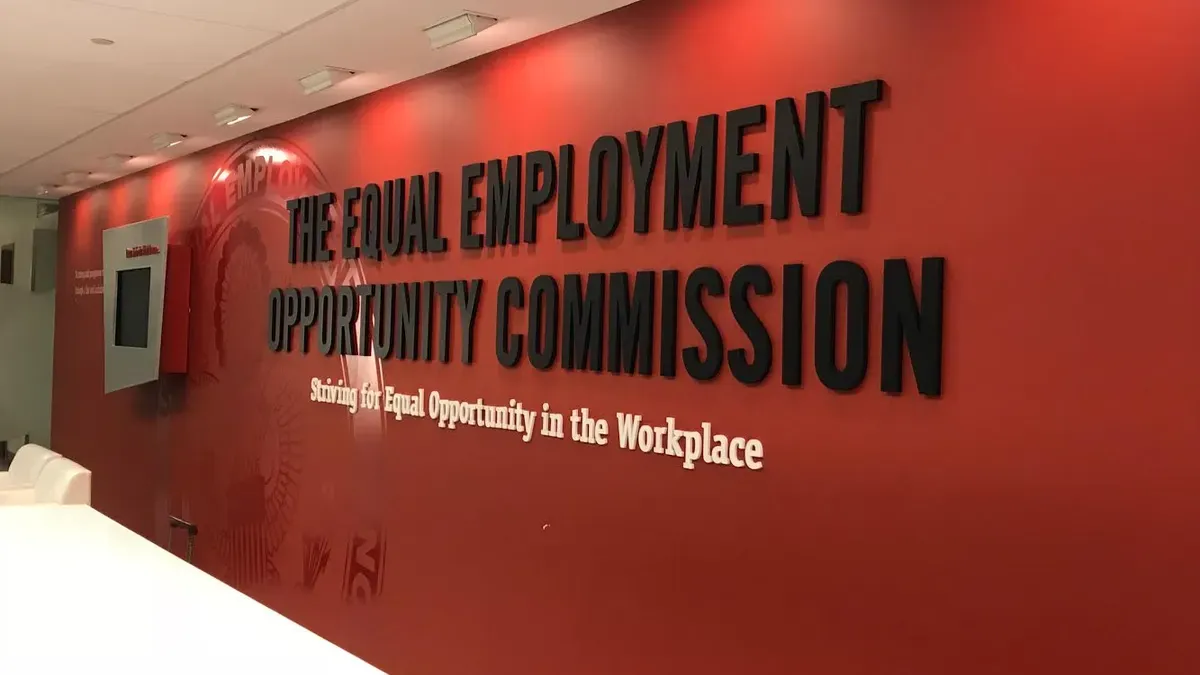 Photo: Equal Employment Opportunity Commission, via imgproxy.divecdn.com
Similarly, Australia's Human Rights Commission has faced criticism when it has strayed into political territory, leading to reforms that clarified its role and strengthened parliamentary oversight. The Australian model provides a template for how equality bodies can maintain credibility while avoiding mission creep.
The Conservative Response
The solution to the EHRC's politicisation is not to abolish the Commission but to return it to its proper constitutional role. This requires several reforms:
First, the Commission's statutory objectives should be clarified to focus exclusively on legal enforcement rather than policy advocacy. The current mandate to 'advance equality of opportunity' is too vague and has enabled mission creep.
Second, the appointment process should be reformed to ensure intellectual diversity on the Commission's board. The current system of appointing equality industry insiders guarantees groupthink and ideological capture.
Third, parliamentary oversight should be strengthened through regular scrutiny of the Commission's guidance and interventions. When unelected bodies make policy, elected representatives must have the power to hold them accountable.
Finally, the Commission should be required to distinguish clearly between legal requirements and policy recommendations in all its publications. Too often, the EHRC presents political preferences as legal obligations, misleading the organisations that rely on its guidance.
The EHRC's transformation from legal regulator to political actor undermines both the rule of law and democratic accountability — and it's time for Parliament to rein in the regulators who have forgotten their place in our constitutional system.